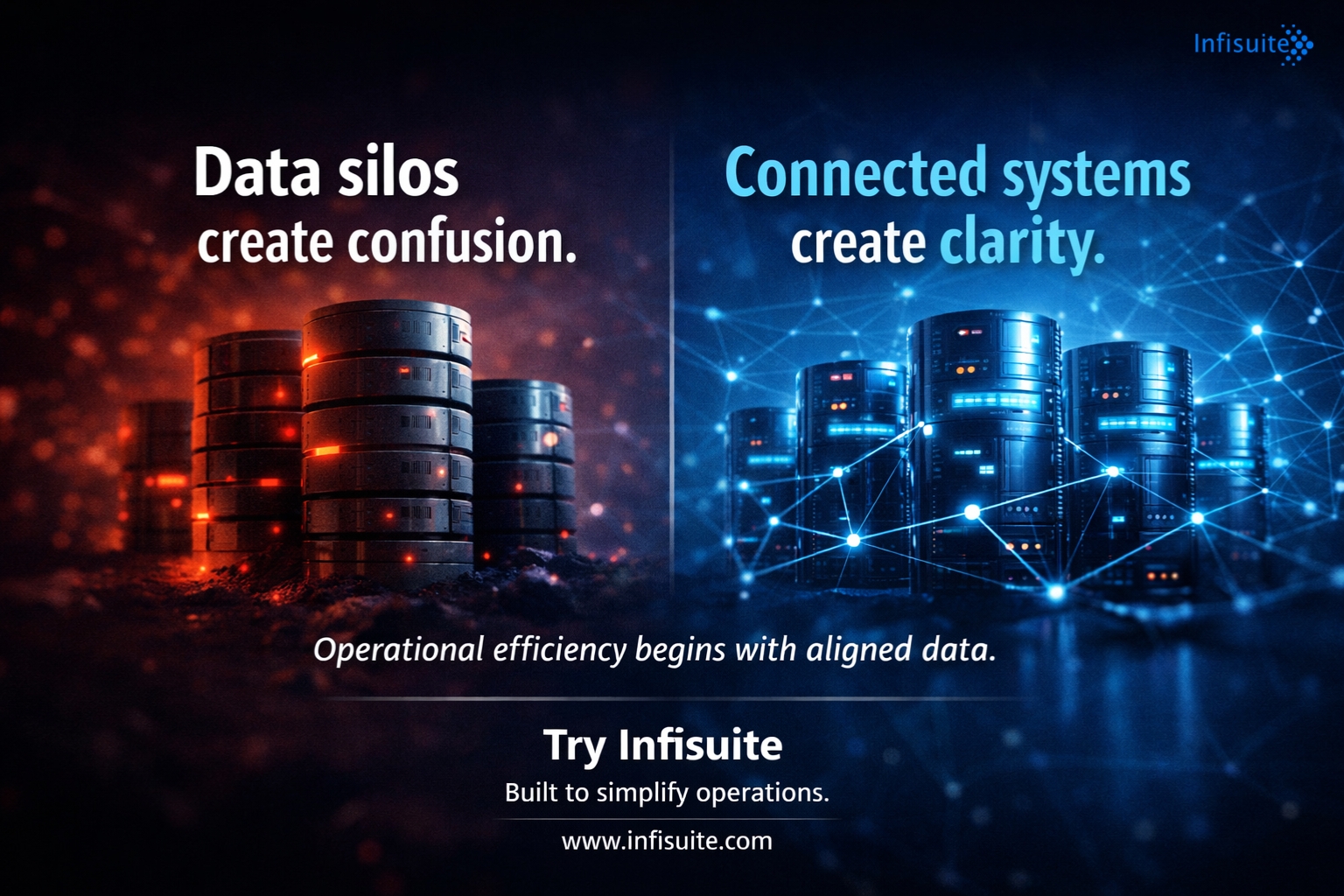


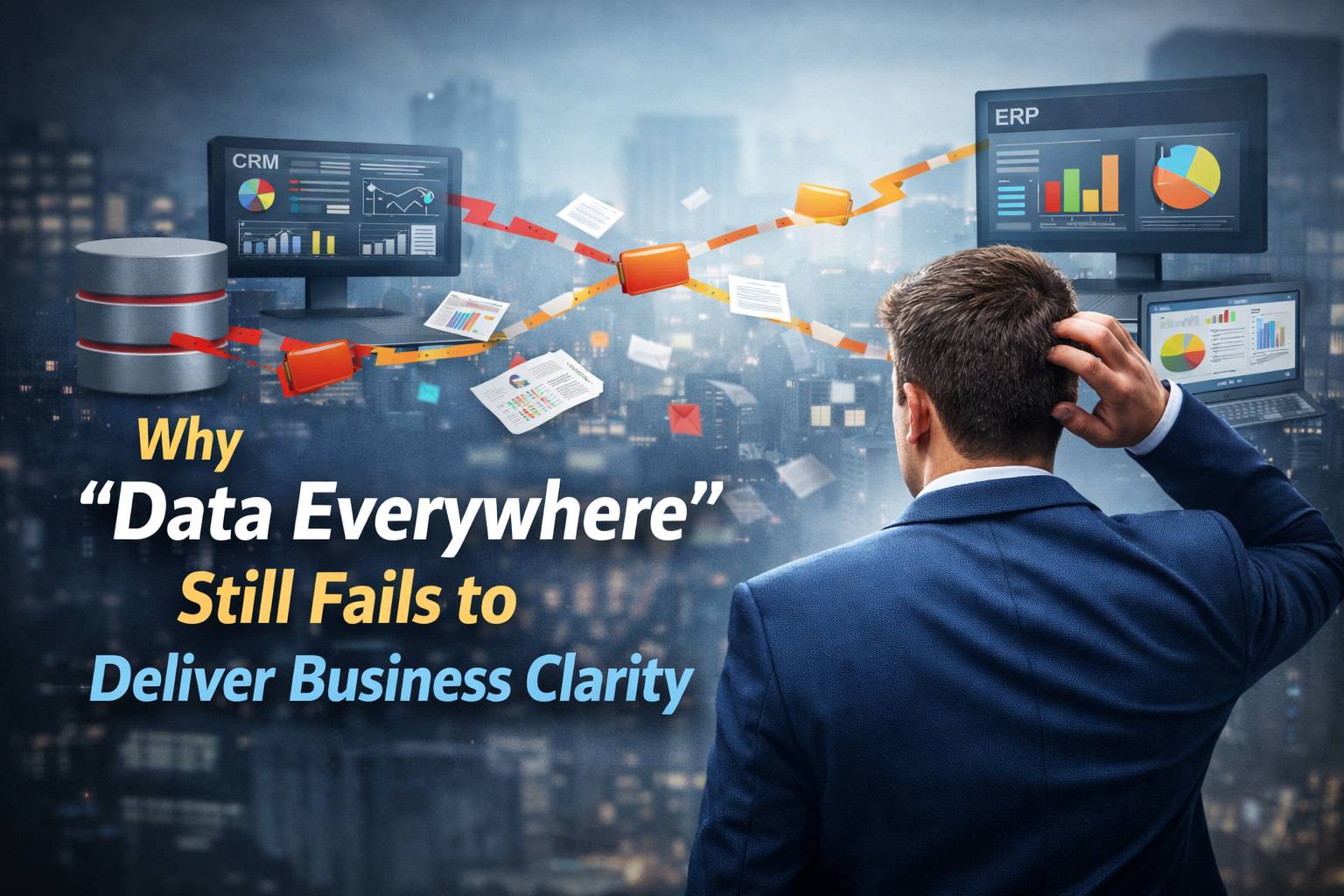
Organizations are drowning in 175 zettabytes of data, yet decision-making remains slow. The problem isn’t a lack of data; it’s the fragmentation caused by disconnected systems.
True clarity comes from connecting data, not just collecting it.
According to IDC’s Global Datasphere forecast, global data volumes continue to grow at an unprecedented pace.
The Paradox of Choice: More Data, Less Speed
Businesses today generate more data than at any point in history. From real-time sales metrics to complex operational logs, the Global Datasphere is predicted to reach 175 zettabytes.
Yet most leaders feel less informed than they did a decade ago.
Why?
Because data is growing, but clarity is not. Most organizations already have the answers they need; they just can’t find them across the noise of a dozen different platforms.
The “Tool Fatigue” Trap
- Companies often try to solve confusion by adding more tools:
- ERP & CRM platforms for departmental management
- Accounting software for financial oversight
- Dashboards and spreadsheets for manual reporting
The result is a “Frankenstein” architecture where each tool stores data separately.
When every team works in isolation, more dashboards don’t improve decisions. They increase the “Trust Tax”, where teams spend meetings debating whose numbers are correct rather than taking action.
Key Insight
According to Gartner’s definition of data integration, poor system integration is a leading cause of slow and inaccurate enterprise decision-making.
How Data Silos Quietly Kill Productivity
Data silos aren’t built on purpose. They form slowly through departmental independence.
- Sales focuses on lead velocity
- Finance focuses on historical accuracy
- Operations focuses on resource efficiency
Without a unified integration strategy, these systems fail to communicate.
PwC’s Global Data & Analytics Survey reports that poor data quality and fragmentation cost organizations millions annually due to rework and missed opportunities.
When data is disconnected:
- Reports show conflicting numbers
- Leadership loses confidence
- Productivity declines
Often, in the very systems companies paid heavily to implement.
Visibility vs. Volume: Knowing the Difference
Having data is not the same as having visibility.
True visibility requires:
- One Version of the Truth — a shared reality across departments
- Consistent Reporting — definitions that don’t change when you switch tabs
- Trusted Numbers — verified and real-time data
McKinsey research on data-driven organizations suggests that companies with unified and trusted data are far more likely to outperform competitors.
Visibility is the competitive edge of the modern era.
The Solution: A Single Source of Truth
To move from “Data Everywhere” to “Actionable Clarity”, businesses must move toward a Single Source of Truth (SSOT).
Benefits of a Connected Data Foundation
| Feature | Fragmented Data | Single Source of Truth |
|---|---|---|
| Decision Speed | Delayed by reconciliation | Immediate and confident |
| Data Trust | Low (teams debate accuracy) | High (one verified source) |
| Manual Work | High (copy-pasting data) | Low (automated pipelines) |
| Accuracy | Prone to human error | Consistent and reliable |
Deloitte’s perspective on integrated data systems highlights how connected data environments improve decision speed and confidence.
Conclusion: Clarity Comes From Connection
The path forward isn’t to collect more data or buy more isolated tools. It is to align what already exists.
Clarity doesn’t come from the volume of your database. It comes from the strength of your connections.
By unifying systems into a single platform, organizations stop managing data and start managing the business.