

Quick Answer
Fragmented systems slow decision-making because information is trapped in disconnected tools that don’t talk to each other. To answer a simple question, leaders wait for someone to pull numbers from multiple systems and reconcile them by hand. By the time the picture is complete, the moment to act has often passed. The fix is consolidation. When sales, finance, inventory, and operations share one integrated platform, decisions that once took days can be made in minutes — on data everyone trusts.
Key Takeaways
- Fragmentation is a speed problem. Disconnected tools force manual work before any decision can be made.
- Delays compound as you grow. The more systems you add, the slower decisions get.
- Slow decisions cost real money. Missed opportunities and late reactions have a price.
- Reconciliation eats time. Teams spend hours matching numbers instead of acting on them.
- Integration restores speed. One connected platform turns days of reporting into minutes.
When a business is small, decisions are fast. One person can see everything, and the answer to most questions is a quick conversation away.
Then the business grows. More tools, more departments, more data. And strangely, decisions get slower — not faster. The very systems meant to help now stand between leaders and the answers they need.
This is the hidden tax of fragmented systems. This article explains how disconnected tools slow decision-making, and what growing businesses can do about it.
What “Fragmented Systems” Actually Means
A fragmented system isn’t one broken tool. It’s many working tools that don’t work together.
Your sales team uses one platform. Finance uses another. Inventory sits in a third. HR has its own. Each does its job well in isolation. But none of them share data automatically.
So the information a leader needs to make a decision is spread across all of them — with no single place to see it whole.
How Fragmentation Slows Decisions
1. Every Question Becomes a Project
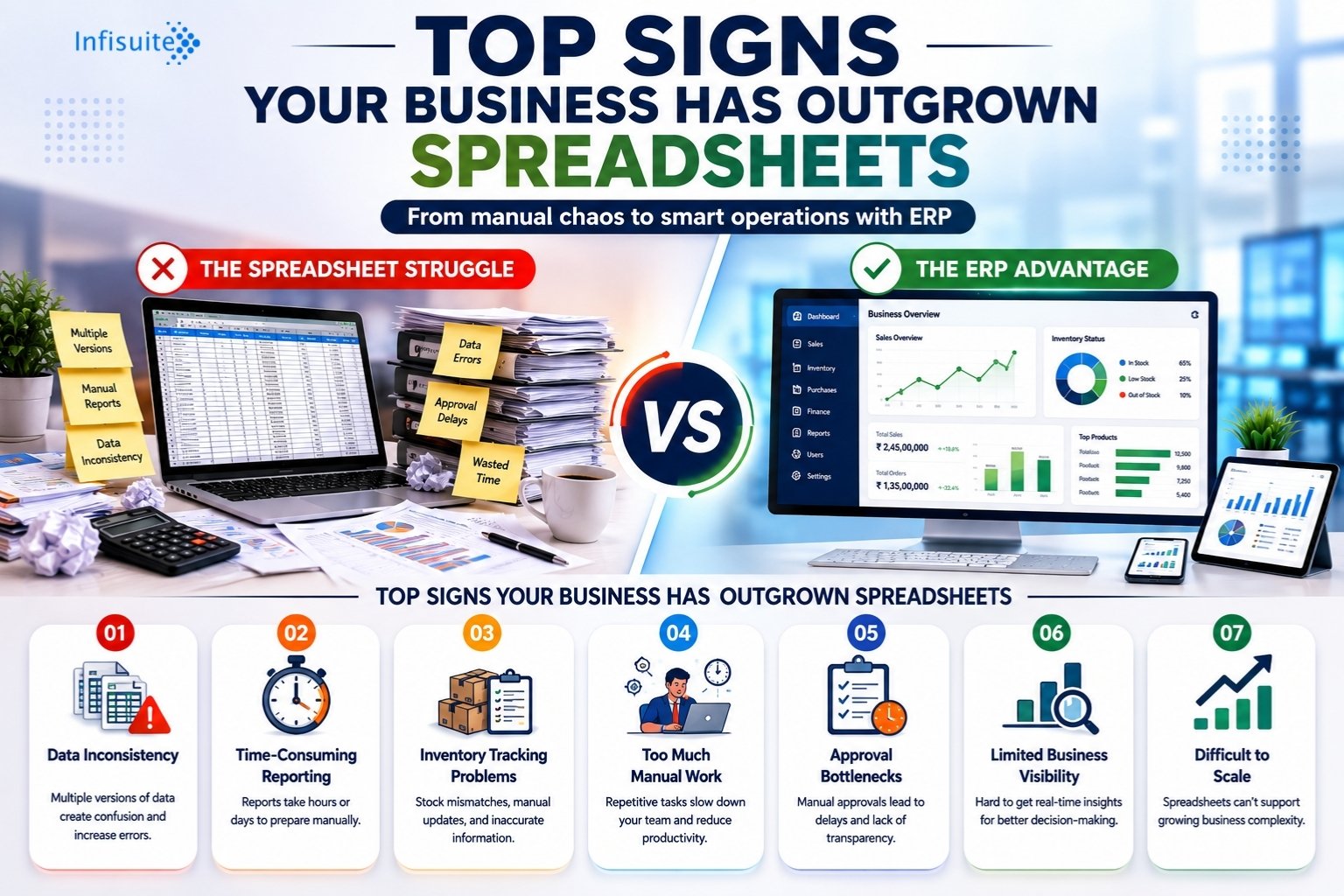
“How profitable was last month?” should be a five-minute answer. With fragmented systems, it becomes a task: pull sales data, pull cost data, pull inventory data, then reconcile them by hand. A simple question turns into a half-day project.
2. The Data Is Already Old
By the time numbers are gathered and reconciled, they’ve aged. Leaders end up making today’s decisions on last week’s picture. In a fast-moving market, that lag is costly.
3. No One Trusts the Numbers
When each system reports slightly different figures, decisions stall in debate about which number is right — instead of moving forward. This is the trust problem we cover in our guide on what a single source of truth means for businesses.
4. Manual Work Introduces Errors
Every manual transfer between systems risks a mistake. Research by spreadsheet expert Professor Raymond Panko found that around 88% of spreadsheets contain errors. When decisions ride on hand-compiled numbers, the risk multiplies.
The Real Cost of Slow Decisions
Slow decision-making isn’t just frustrating. It has a measurable business cost.
| Impact Area | Fragmented Systems | Integrated Platform |
|---|---|---|
| Time to answer | Hours or days of manual work | Minutes, on demand |
| Data freshness | Outdated by the time it’s ready | Real-time, always current |
| Opportunity capture | Missed while waiting for data | Acted on quickly |
| Team focus | Reconciling numbers | Acting on insights |
As a business grows, this cost compounds. Every new disconnected tool adds another source to reconcile — and slows decisions further. It’s the same dynamic we describe in our article on why businesses struggle with too many software tools.
The Fix: Connect Your Systems
The solution to fragmentation is integration. When your core systems share one platform and one database, the delays disappear.
A question like “how profitable was last month?” no longer triggers a data-gathering project. The answer is already there — live, accurate, and trusted — because every department feeds the same system in real time.
This is exactly what an integrated ERP delivers. Instead of many disconnected tools, sales, finance, inventory, and operations all work from one shared source of truth. Decisions that took days now take minutes.
To understand where this fragmentation comes from in the first place, read our article on how data silos destroy operational efficiency.
How Infisuite Restores Decision Speed
- One shared platform. Sales, finance, inventory, and HR all live in one system.
- Real-time data. Every transaction updates everywhere instantly — no manual transfers.
- Instant reporting. Answers are available on demand, not after days of compiling.
- Trusted numbers. One source of truth means no more debating which figure is right.
The result: your business makes faster, better-informed decisions — and keeps that speed as it grows.
Frequently Asked Questions
Why do fragmented systems slow decision-making?
Because the information needed for a decision is spread across disconnected tools. Someone has to manually gather and reconcile numbers from each system before any decision can be made, which turns quick questions into lengthy projects.
What are fragmented systems?
Fragmented systems are multiple separate tools — for sales, finance, inventory, HR, and so on — that each work well alone but don’t share data automatically. The result is scattered information with no single place to see the whole picture.
How does fragmentation cost a business money?
Slow decisions mean missed opportunities, late reactions to problems, and hours of staff time spent reconciling numbers instead of acting on them. These costs compound as the business grows and adds more disconnected tools.
How do you fix fragmented systems?
By integrating them. Moving to a single connected platform where all core systems share one database eliminates manual reconciliation and gives every team real-time, trusted data.
How does ERP speed up decision-making?
An integrated ERP unifies sales, finance, inventory, and operations in one real-time system. Reports are instant, numbers always agree, and decisions that once took days can be made in minutes.
Conclusion
Growing businesses don’t slow down because their people get slower. They slow down because their systems get more fragmented — and every decision has to fight through disconnected tools to find the data it needs.
The fix isn’t working harder or hiring more analysts. It’s connecting your systems, so the information is already there when you need it.
When your data lives in one integrated platform, decisions get their speed back. Questions get instant answers. And your business can move as fast as the market demands — no matter how big it grows.
Written by Anjana A
ERP & Business Software Specialist, Infisuite
Anjana A writes about ERP, data, and business automation for growing SMEs. Drawing on Infisuite’s experience helping businesses connect disconnected systems, she focuses on practical guidance for making faster, better-informed decisions as you scale.
Ready to make faster decisions on data you can trust? Talk to the Infisuite team to see how one integrated platform restores your decision speed.