

Quick Answer
A Single Source of Truth (SSOT) is one unified, reliable data foundation that every team and system in a business draws from. Instead of sales, finance, and operations each keeping separate versions of the same data, everyone works from the same numbers. This eliminates conflicting reports, builds trust in the data, and speeds up decisions. Most growing businesses achieve a single source of truth by moving from disconnected tools to one integrated platform, such as an ERP, where all data lives together and updates in real time.
Key Takeaways
- A single source of truth is one unified data foundation that every team relies on.
- The problem isn’t too little data — it’s too many versions of it. Disconnected systems produce conflicting numbers.
- Conflicting data destroys trust. Leaders waste time validating figures instead of deciding.
- Alignment matters more than tools. More dashboards on disconnected data just visualise the inconsistency.
- An integrated ERP delivers SSOT by uniting all systems on one shared, real-time platform.
Modern businesses generate huge amounts of data. But many leaders still struggle to get clear answers from that data.
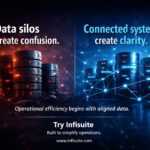
The problem is not lack of information. The problem is having too many versions of the same information.
When systems produce different numbers, clarity disappears. This challenge is closely related to the issue discussed in our article on why data everywhere still fails to deliver business clarity.
This is why many organizations are focusing on building a Single Source of Truth (SSOT) — a unified data foundation that ensures everyone in the organization works with the same information.
According to Harvard Business Review’s research on data-driven decision making, organizations that rely on consistent and shared data make faster and more confident decisions.
The Problem: Different Systems, Different Answers
As businesses grow, they adopt more software systems such as:
- CRM platforms for sales
- Accounting systems for finance
- Operations software for delivery
- HR platforms for workforce management
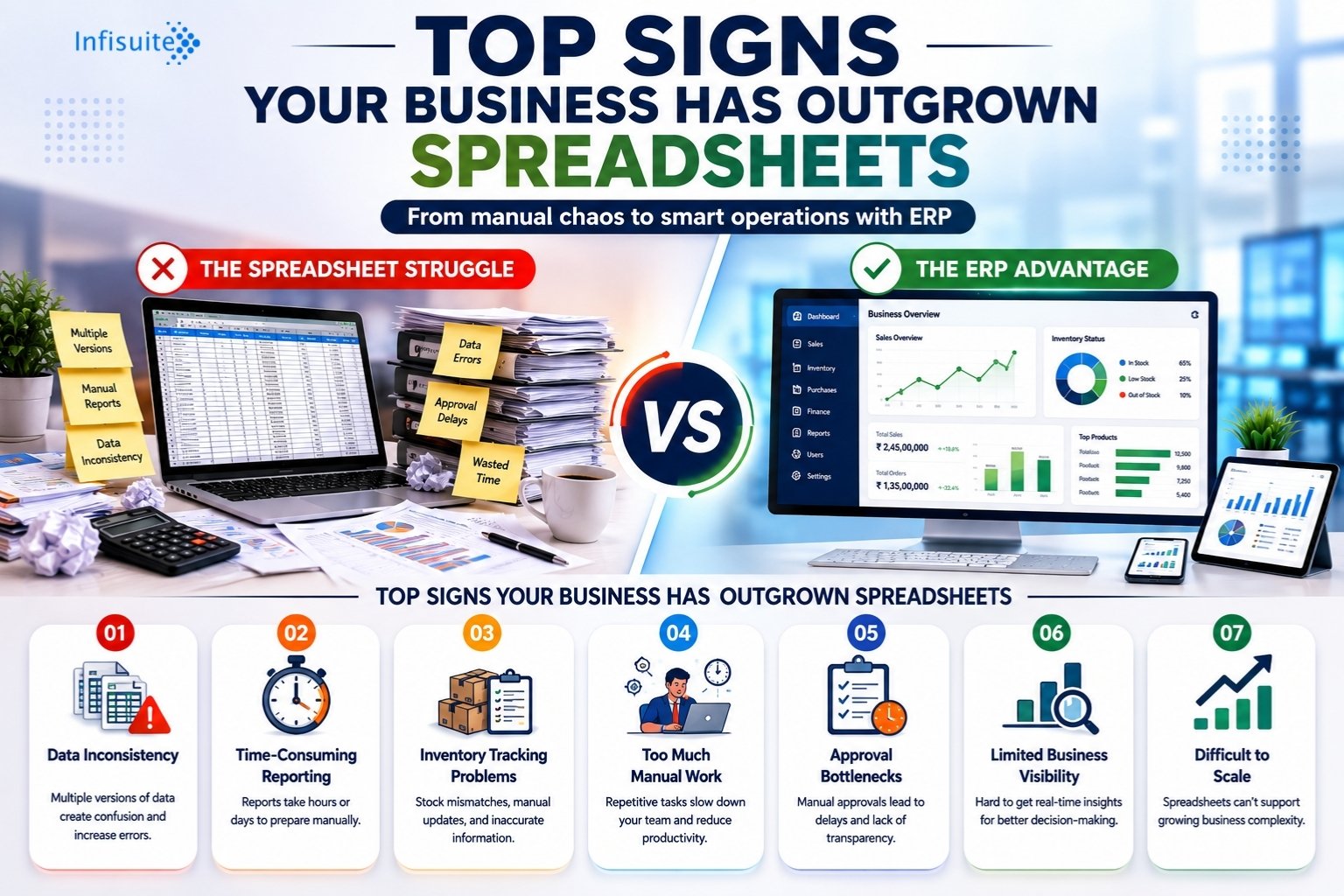
Each system stores important information, but these systems often operate independently. Over time this creates multiple versions of the same data.
Sales may report one number. Finance may report another. Operations may see something different.
When reports don’t match, leaders spend time validating numbers instead of making decisions. This fragmentation is also explained in our article on how fragmented systems slow decision-making in growing businesses.
What Is a Single Source of Truth?
A Single Source of Truth is a reliable and unified data foundation where business information is aligned across systems.
Instead of each department maintaining separate datasets, all teams rely on consistent information. This ensures:
- Consistent reporting across the whole business
- Shared metrics that every team agrees on
- Reliable dashboards built on trustworthy data
- Greater trust in business data overall
According to Gartner’s definition of data integration, organizations that integrate and govern their data effectively reduce reporting conflicts and improve operational performance.
Scattered Data vs a Single Source of Truth
| Dimension | Scattered Data | Single Source of Truth |
|---|---|---|
| Reporting | Systems disagree on the numbers | Consistent across every team |
| Trust in data | Low — figures constantly questioned | High — one agreed set of numbers |
| Decision speed | Slowed by validating data | Fast and confident |
| Team collaboration | Siloed, conflicting views | Aligned, shared understanding |
Why It Matters for Growing Businesses
Growth naturally increases complexity. Businesses gain more customers, teams, and systems. Without a shared data foundation, complexity quickly turns into confusion.
Research by McKinsey on data-driven organizations shows that companies that effectively use and align their data outperform competitors in both operational efficiency and customer growth.
A Single Source of Truth helps businesses:
- Make faster decisions with data everyone trusts
- Reduce manual reporting and reconciliation work
- Improve collaboration between teams
- Increase confidence in every report
In simple terms, it turns data into usable insight.
Alignment Is More Important Than Tools
Many companies try to solve data problems by adding more dashboards or analytics tools. But tools alone cannot solve fragmentation.
If underlying systems are disconnected, new dashboards will simply visualize inconsistent data. This is the same trap we describe in our article on why businesses struggle with too many software tools.
A Single Source of Truth focuses on alignment first. This includes:
- Shared definitions of key metrics
- Integrated systems that pass data automatically
- Consistent reporting structures
- Reliable data flows between departments
Once alignment exists, analytics becomes meaningful.
How an Integrated ERP Creates a Single Source of Truth
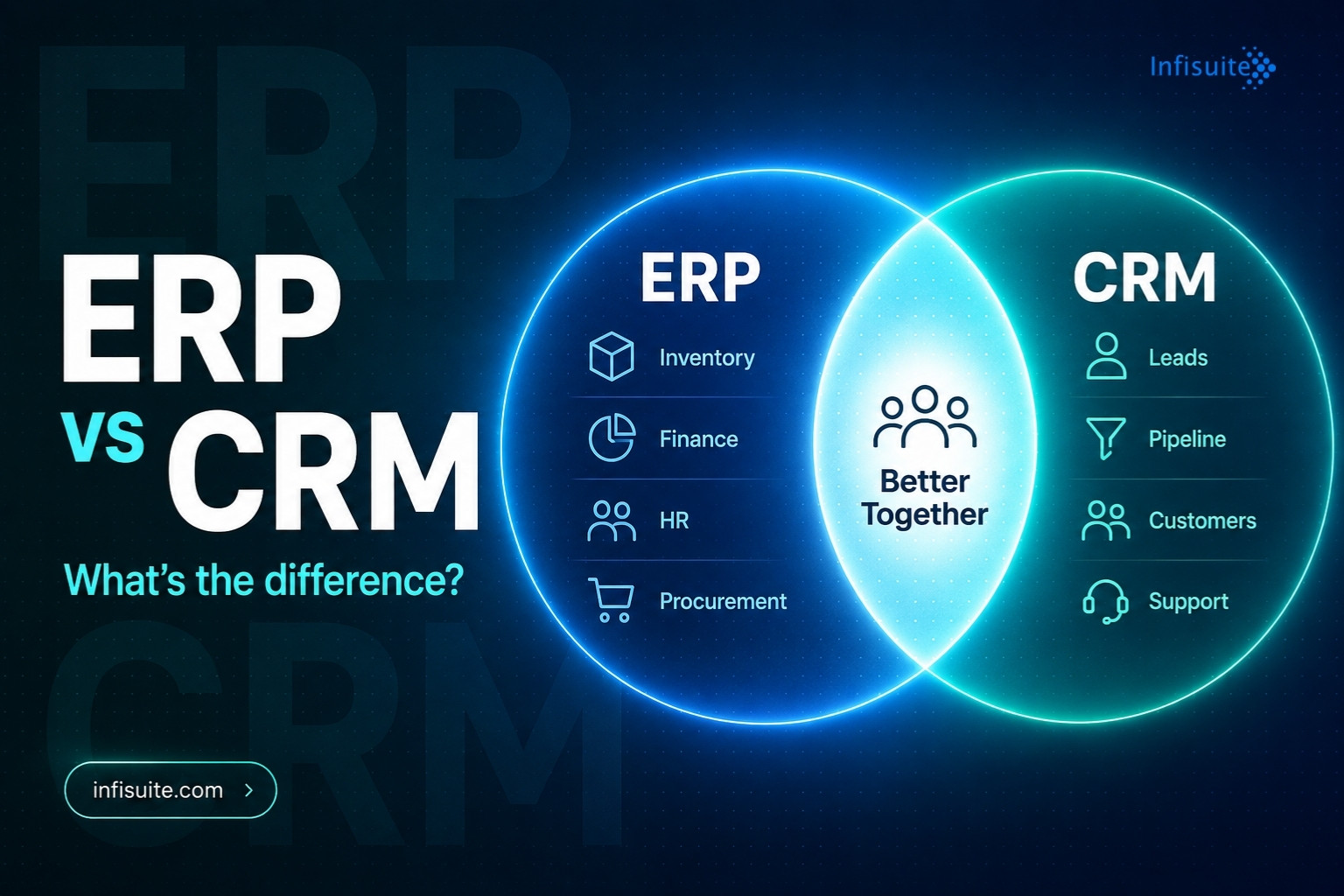
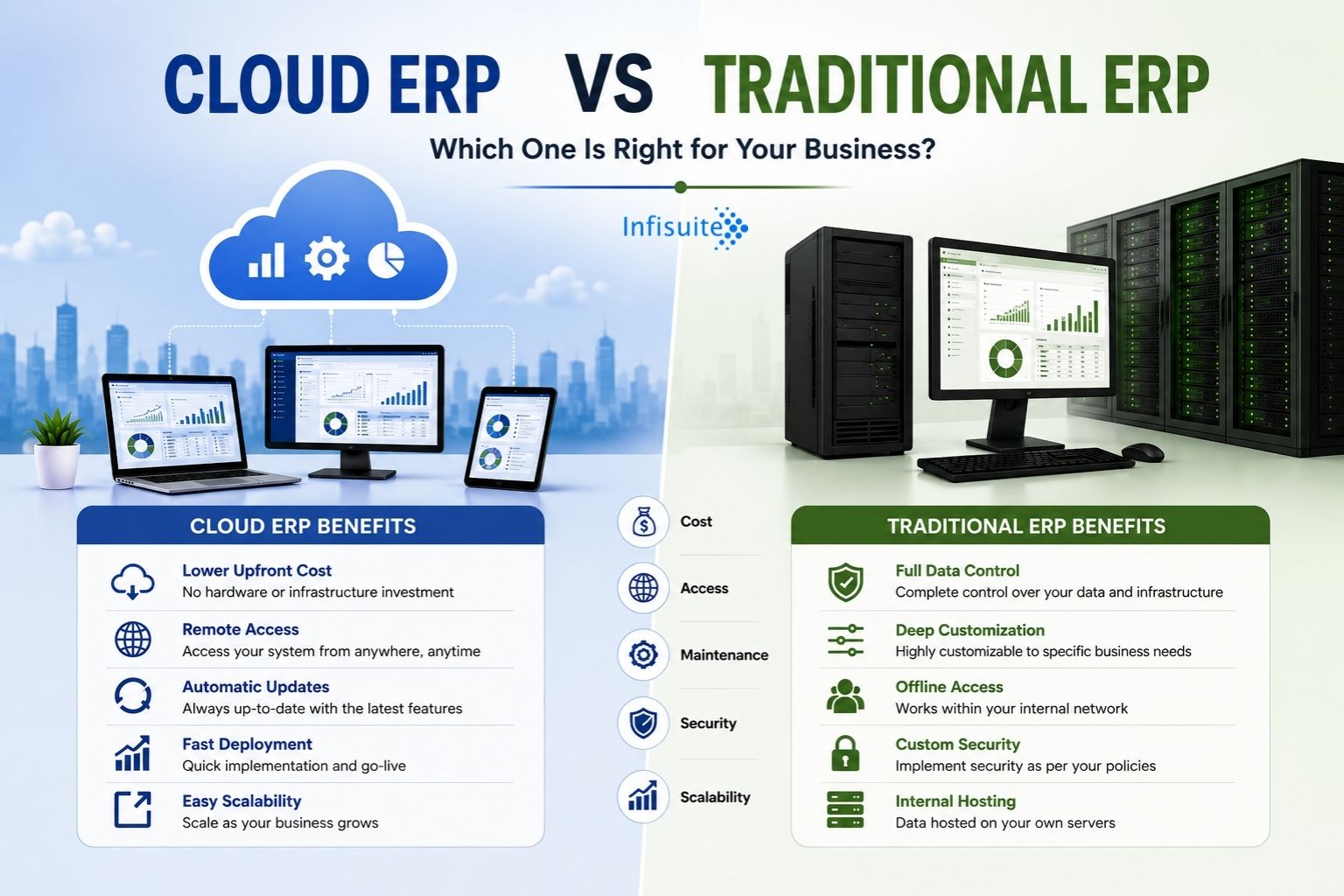
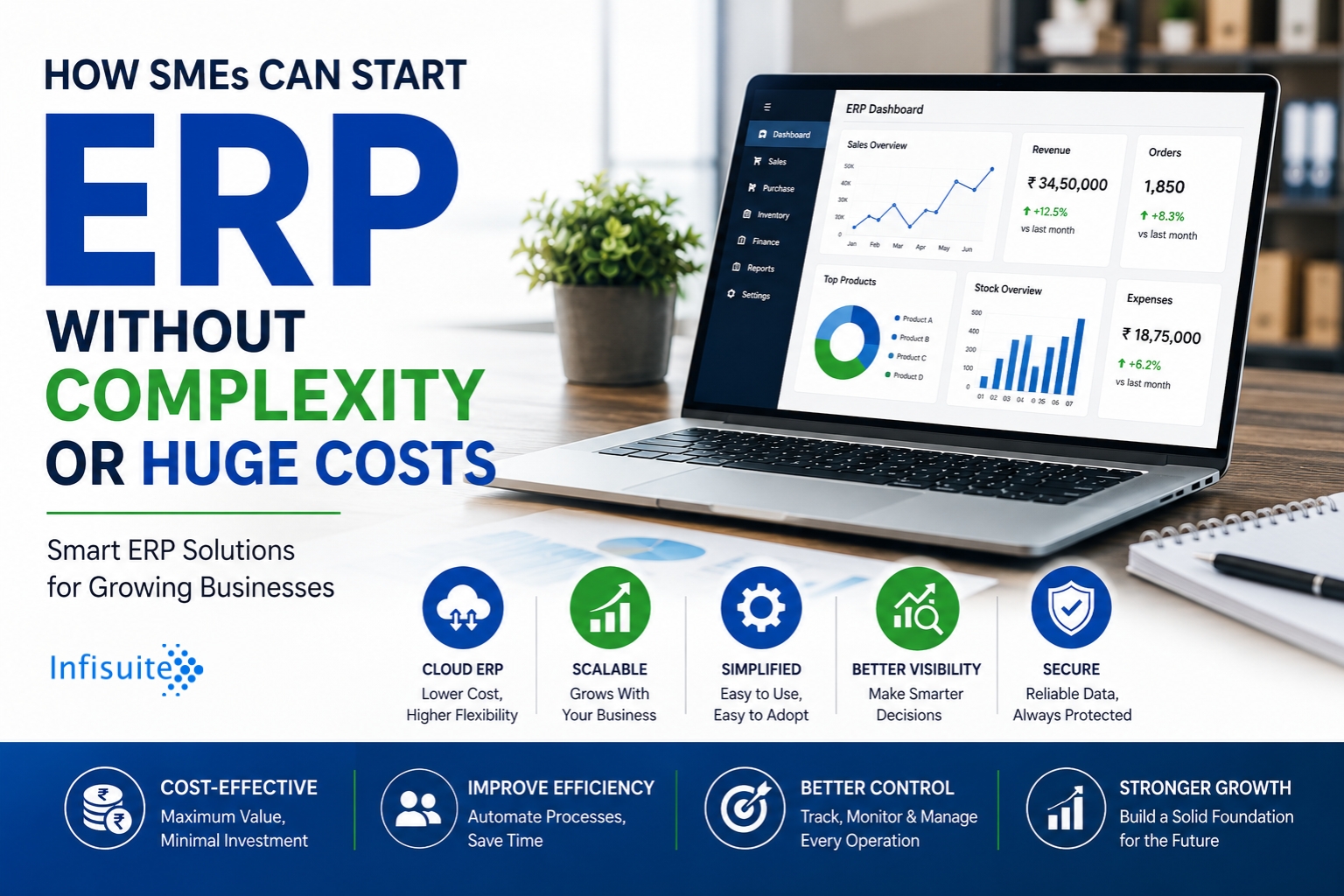
The most direct way for a growing business to build a single source of truth is an integrated ERP platform. Instead of separate tools for sales, finance, inventory, and HR, everything shares one database.
- One shared platform. Every department works from the same data.
- Real-time updates. A change in one place updates everywhere instantly.
- No reconciliation. Numbers always match, because there’s only one set.
- Full visibility. Leadership sees the whole business from one place.
This is exactly how Infisuite is built — uniting your core operations on one platform, so your business finally works from a single, trusted source of truth.
Frequently Asked Questions
What is a single source of truth (SSOT)?
A single source of truth is one unified, reliable data foundation that every team and system draws from. Instead of departments keeping separate versions of the same data, everyone works from the same numbers — eliminating conflicting reports.
Why do businesses need a single source of truth?
Because disconnected systems produce conflicting numbers, which erodes trust and slows decisions. A single source of truth gives every team consistent, reliable data, so leaders can decide quickly and confidently.
What’s the difference between having lots of data and having a single source of truth?
Having lots of data means information exists, often in many conflicting versions across tools. A single source of truth means that data is unified and consistent, so there’s one agreed answer to every question.
Can more dashboards create a single source of truth?
No. If the underlying systems are disconnected, new dashboards simply visualise inconsistent data. A single source of truth requires aligning and integrating the systems first, not just adding more analytics on top.
How does an ERP create a single source of truth?
An integrated ERP unites sales, finance, inventory, and HR on one shared database that updates in real time. Because there’s only one set of data, numbers always match and every team sees the same accurate picture.
Conclusion
Businesses today are not limited by the amount of data they generate. They are limited by the number of disconnected systems they rely on.
A Single Source of Truth ensures that everyone in the organization works with the same reliable information. When data is aligned, clarity improves.
And when clarity improves, decisions become faster and more confident.
Written by Anjana A
ERP & Business Software Specialist, Infisuite
Anjana A writes about ERP, data, and business automation for growing SMEs. Drawing on Infisuite’s experience helping businesses unify fragmented systems, she focuses on practical guidance for building one trusted source of truth across every department.
Ready to build a single source of truth for your business? Talk to the Infisuite team to see how one integrated platform aligns all your data.