


Quick Answer
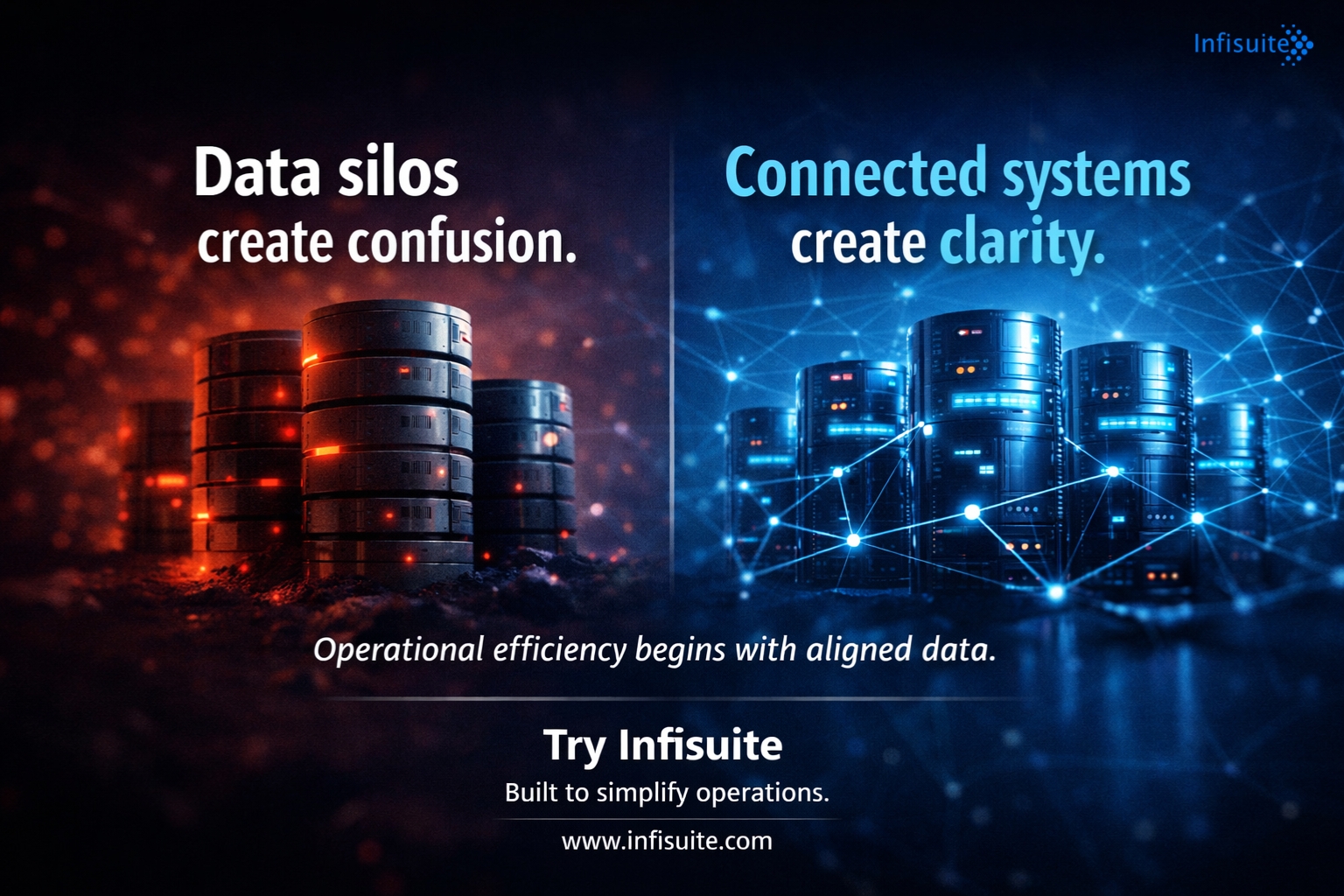
Data silos happen when business information is trapped in separate systems that don’t communicate. Sales data sits in a CRM, finance data in accounting software, operations in another tool — none of them sharing. This destroys operational efficiency by creating conflicting reports, slowing decisions, forcing manual reconciliation, and duplicating work. The fix isn’t more dashboards. It’s integration — connecting core systems so data flows automatically and every team works from one shared, trusted source of truth.
Key Takeaways
- Data silos = disconnected systems. Information trapped in separate tools that don’t share.
- They create conflicting reports. Sales, finance, and operations each report different numbers.
- They slow decisions. Leaders validate data before acting instead of acting on it.
- They waste time. Teams manually reconcile numbers and duplicate work.
- Integration is the fix. Connected systems create one aligned source of truth.
Modern organizations generate more data than ever before. Yet many businesses struggle to operate efficiently despite having access to large volumes of information.
The reason is often data silos.
When information is stored in separate systems that do not communicate with each other, teams cannot access a shared view of the business. This leads to delays, confusion, and duplicated work.
This challenge is closely related to the issues discussed in our earlier articles on why data everywhere still fails to deliver business clarity and why fragmented systems slow decision-making.
According to Harvard Business Review research on data-driven decision making, organizations that align their data across departments make faster and more confident decisions.
What Are Data Silos?
Data silos occur when information is stored in systems that operate independently.
For example:
- Sales teams use CRM systems
- Finance teams use accounting software
- Operations rely on separate dashboards
- HR departments manage workforce systems
Each system stores valuable data. But when these systems are disconnected, they create isolated pools of information.
Over time this leads to multiple versions of the same business data. Sales may report one number, finance another, and operations something completely different.
The Hidden Cost of Data Silos
At first, data silos may appear manageable. But as organizations grow, their impact becomes more visible.
Businesses begin to experience:
- Conflicting reports across departments
- Delayed decision-making
- Manual reconciliation of numbers
- Duplicated work between teams
Instead of focusing on strategy and execution, employees spend time verifying data.
Research from McKinsey on data-driven organizations shows that companies that align and integrate their data improve productivity and operational performance.
Siloed Data vs Connected Data
| Impact Area | Siloed Data | Connected Data |
|---|---|---|
| Reporting | Conflicting numbers across teams | One consistent set of figures |
| Decision speed | Slowed by data validation | Fast and confident |
| Collaboration | Teams see different versions | Everyone aligned on one view |
| Staff time | Wasted on manual reconciliation | Spent on real work |
How Data Silos Slow Organizations Down
Slower Decision-Making
When leaders receive different reports from different systems, they must validate information before acting. This delays decisions and slows execution.
Reduced Collaboration
Departments working with separate datasets struggle to collaborate effectively because each team sees a different version of the business.
Operational Inefficiency
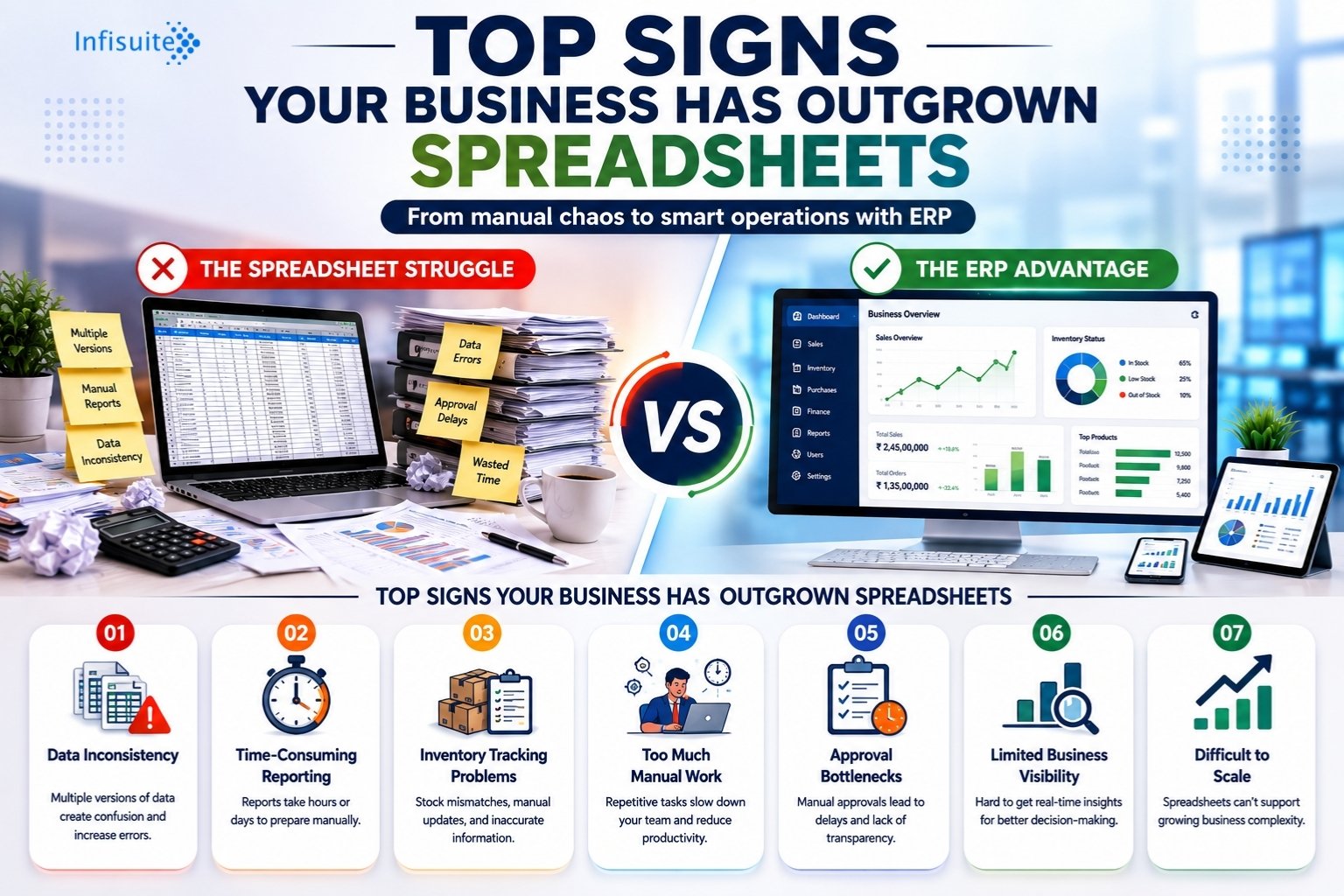
Employees often export spreadsheets and manually combine reports from multiple systems.
According to Gartner’s data integration guidance, poor integration between systems is a major cause of operational inefficiency in enterprises.
Breaking Down Data Silos
Removing data silos requires more than adding dashboards or analytics tools. Organizations must focus on aligning their systems and data architecture.
Important steps include:
- Integrating core business systems
- Establishing shared data definitions
- Creating consistent reporting structures
- Ensuring data flows across departments
This approach helps organizations move toward a Single Source of Truth where business data is aligned across teams.
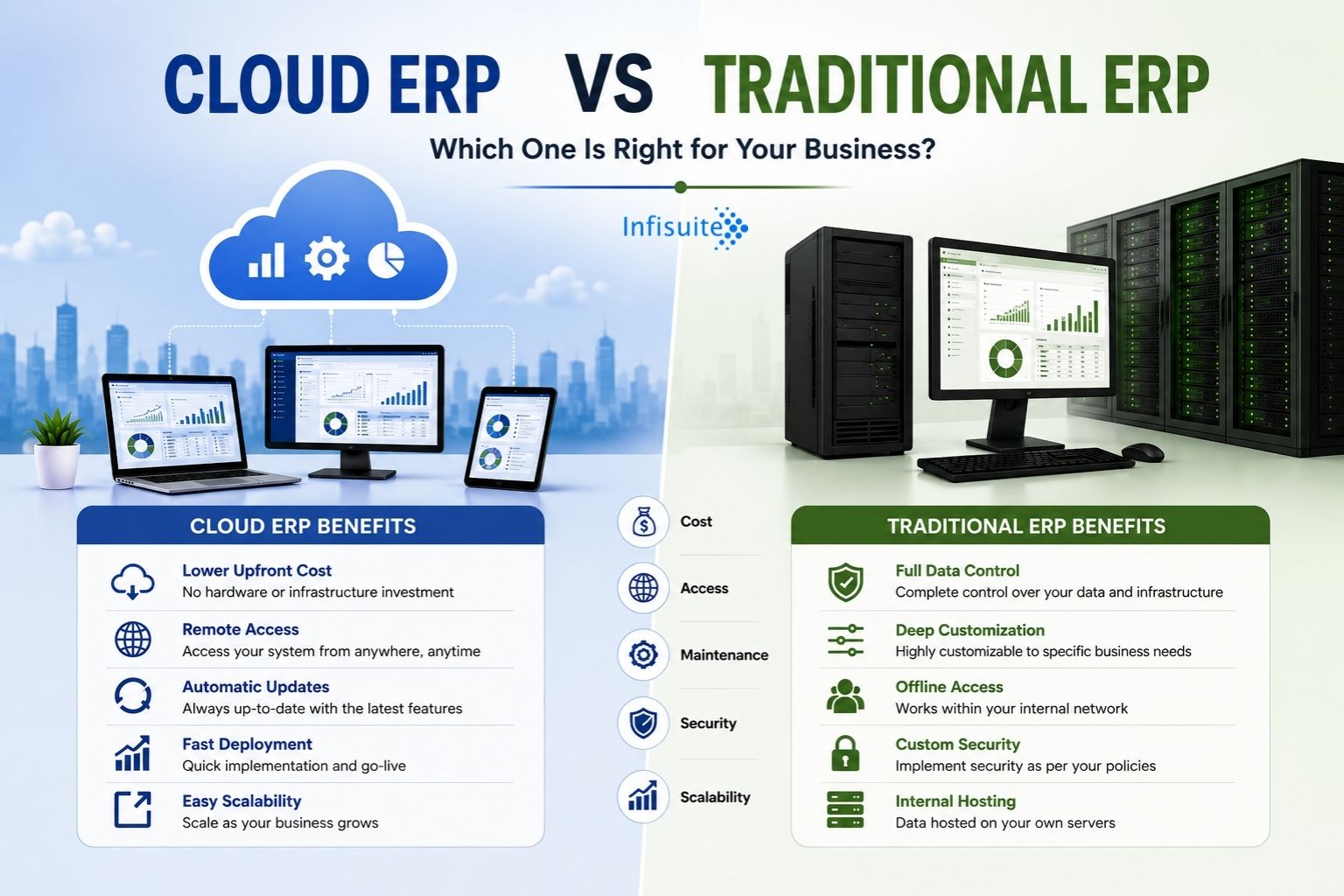
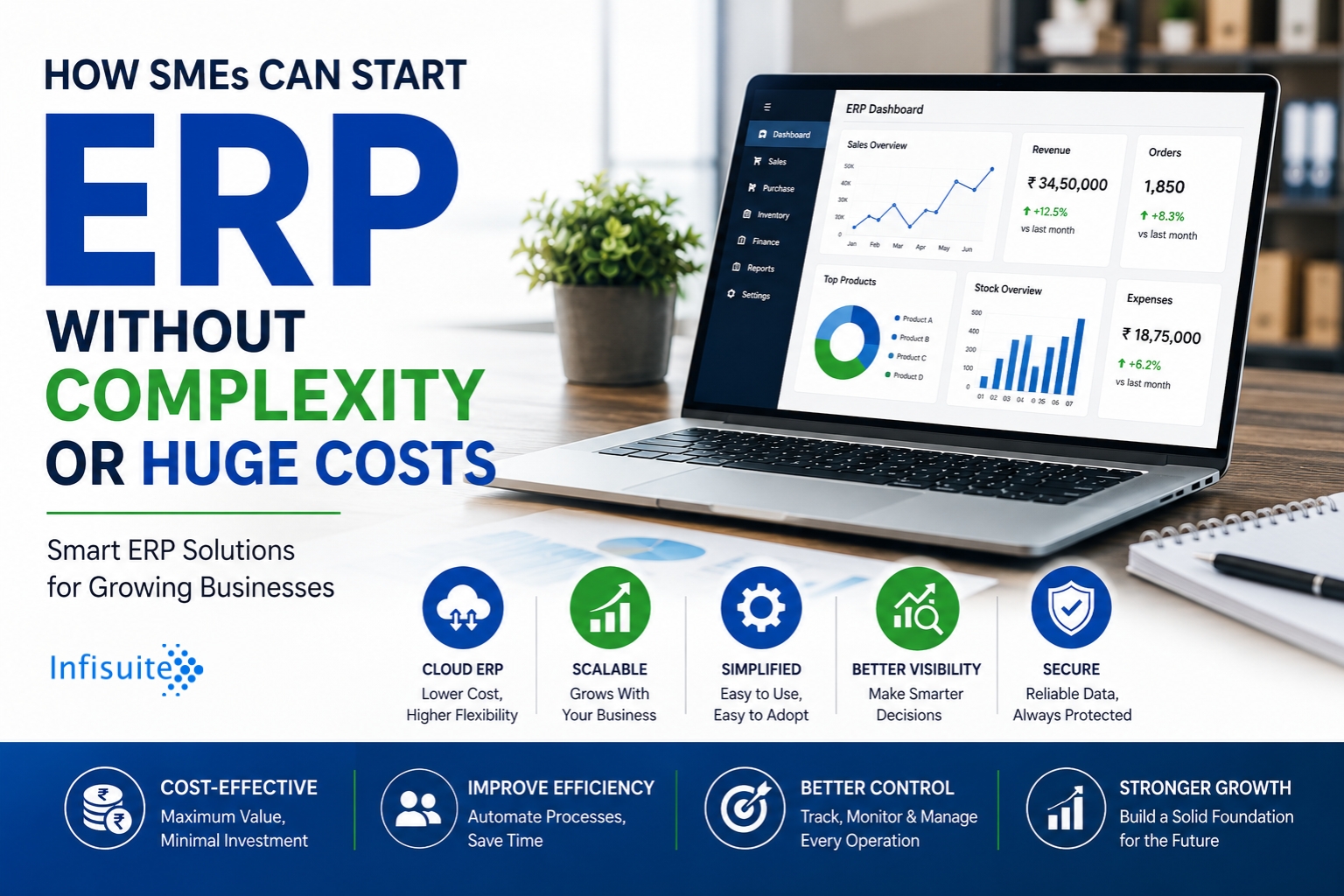
The most direct way to achieve this is an integrated ERP platform. Instead of separate, disconnected tools, sales, finance, inventory, and HR all share one database — so data flows automatically and silos simply can’t form. This is also why so many growing businesses struggle when they rely on too many separate software tools.
Frequently Asked Questions
What are data silos?
Data silos occur when business information is stored in separate systems that operate independently and don’t share data. Sales data sits in a CRM, finance in accounting software, and operations in other tools — creating isolated pools of information and multiple versions of the same data.
Why are data silos bad for business?
Data silos create conflicting reports, slow decision-making, force manual reconciliation, and duplicate work across teams. Instead of focusing on strategy, employees spend time verifying which numbers are correct — reducing overall operational efficiency.
How do data silos affect decision-making?
When different systems produce different numbers, leaders must validate information before acting. This delays decisions and slows execution, because time is spent reconciling data instead of using it.
How do you break down data silos?
By integrating core business systems, establishing shared data definitions, creating consistent reporting, and ensuring data flows across departments. The most direct route is an integrated ERP platform where all systems share one database.
How does ERP eliminate data silos?
An integrated ERP unites sales, finance, inventory, and HR on one shared database. Because every department works from the same real-time data, isolated pools of information can’t form — giving the business one aligned source of truth.
Conclusion
Data silos quietly reduce operational efficiency in many growing businesses.
While companies continue investing in new software and analytics tools, the real challenge often lies in how data is structured and shared.
Breaking down silos allows teams to access consistent information, collaborate better, and make faster decisions.
Clarity is not created by more data. It is created by aligned data.
Written by Anjana A
ERP & Business Software Specialist, Infisuite
Anjana A writes about ERP, data, and business automation for growing SMEs. Drawing on Infisuite’s experience helping businesses break down data silos, she focuses on practical guidance for building connected, efficient operations across every department.
Ready to break down the silos slowing your business? Talk to the Infisuite team to see how one integrated platform connects all your data.




Data becomes powerful when it is connected and trusted across the organization.