

Executive Summary
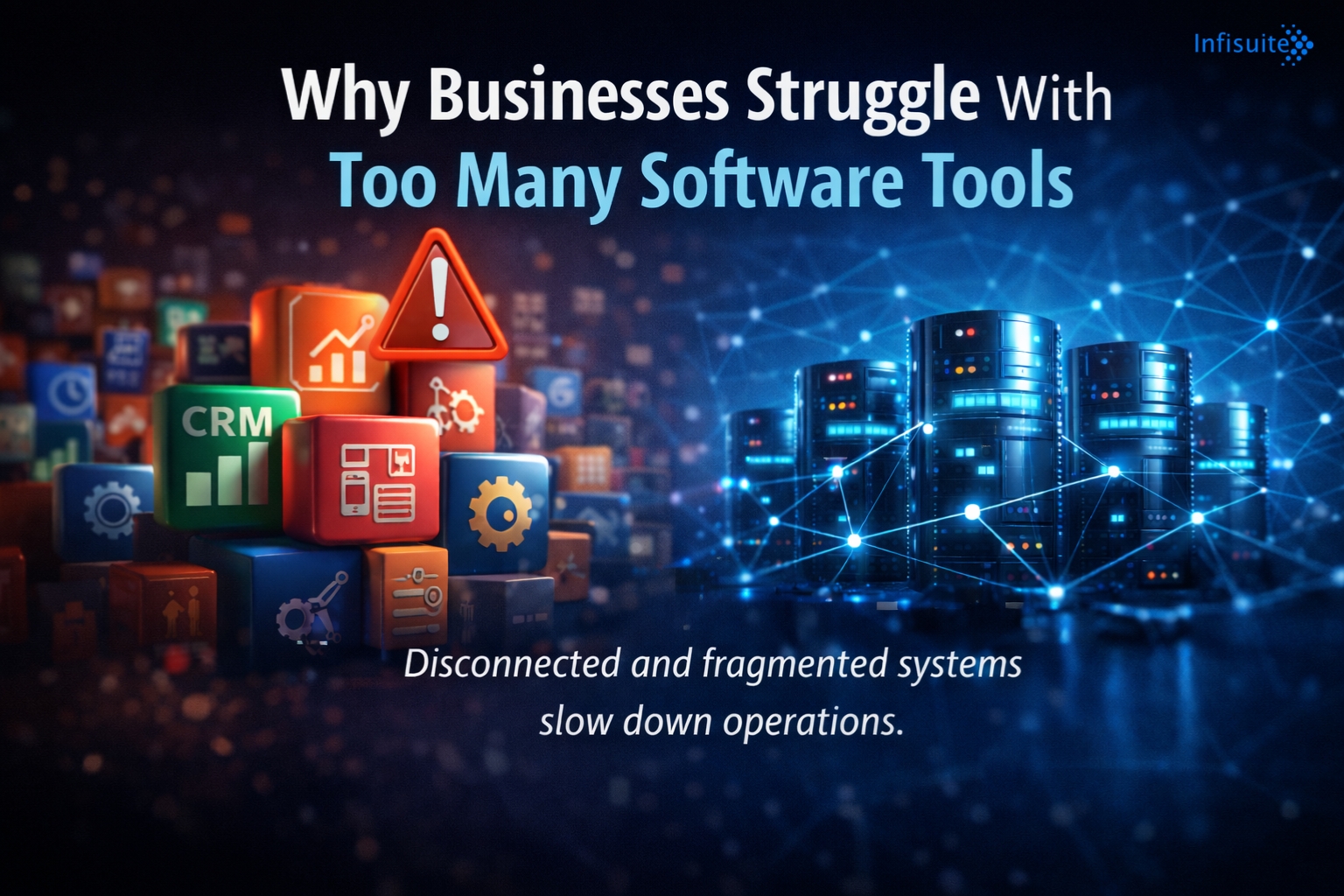
As businesses grow, decision-making becomes slower — not because leaders lack insight, but because systems become fragmented.
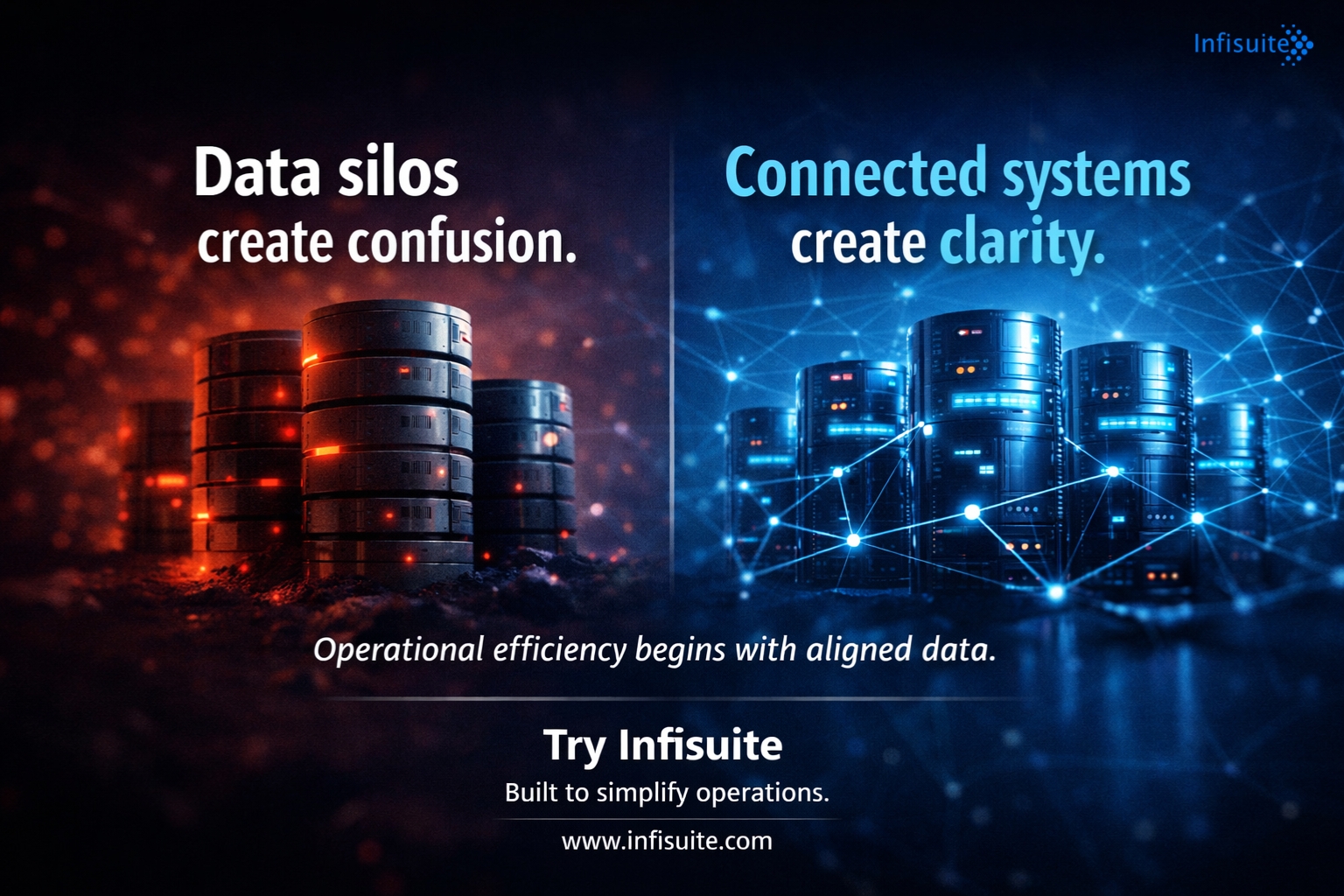
Disconnected platforms create conflicting reports, manual reconciliation, and operational friction. In growing organizations, fragmentation quietly becomes the biggest barrier to speed.
This challenge builds on what we discussed in our article on why data everywhere still fails to deliver business clarity , where disconnected systems limit visibility across teams.
According to Harvard Business Review’s research on data-driven decision-making , performance improves only when information is accessible and aligned across the organization. When it isn’t, speed declines despite increasing data availability.
Growth Creates Complexity
Growth brings:
- More departments
- More tools
- More reporting layers
- More workflows
What once worked in a small structure begins to fracture under scale.
Teams adopt specialized systems:
- CRM for sales
- Accounting software for finance
- Separate dashboards for operations
- Independent HR platforms
Each tool performs well individually. But together, they create silos.
As explained in Gartner’s definition of data integration , fragmented systems are a primary cause of inconsistent reporting and delayed enterprise decisions.
The Hidden Cost of Reconciliation
In growing companies, leadership meetings often revolve around reconciling numbers:
- Why does sales show one revenue figure?
- Why does finance show another?
- Which report is accurate?
This reconciliation process creates what many executives informally call a “decision tax.”
Instead of acting on insights, teams spend time validating them.
According to the PwC Global Data and Analytics Survey , poor data integration and quality issues significantly impact operational efficiency and delay strategic action.
Speed Is a Competitive Advantage
Decision speed matters.
McKinsey’s research on data-driven organizations highlights that companies effectively integrating and leveraging data outperform competitors in growth and customer acquisition.
But integration is not just about collecting data in one place.
It requires:
- Consistent definitions
- Shared metrics
- Connected workflows
- Real-time synchronization
Without these, growth increases complexity faster than systems can adapt.
Fragmentation Slows Execution
When systems are disconnected:
- Reports conflict
- Teams duplicate work
- Approvals take longer
- Forecasts become unreliable
Over time, this slows execution across the organization.
Leaders may perceive hesitation or misalignment within teams. In reality, the root issue is structural.
Fragmented architecture creates friction.
Friction delays decisions.
The Shift Toward Connected Systems
To maintain decision speed during growth, businesses must move toward integrated system design.
This does not mean adding more dashboards. It means aligning existing systems around:
- A shared data foundation
- Unified reporting standards
- Cross-functional visibility
- Automated data flows
When systems align, decisions accelerate.
When decisions accelerate, execution strengthens.
Conclusion
Growing businesses rarely struggle because they lack ambition or strategy.
They struggle when their systems evolve independently.
Fragmentation is not immediately visible. But its impact compounds over time.
Decision speed is no longer optional. It is structural.