

Quick Answer
Research consistently puts the ERP implementation failure rate between 55% and 75% — meaning most ERP projects overrun on cost, timeline, or expected outcomes. Total collapses are rare; the typical failure is a system that goes live but delivers far less value than promised. The data shows failure risk varies by company size, industry, and above all by implementation approach: big-bang go-lives, heavy customisation, and IT-led projects fail most often, while phased, business-led, Cloud ERP implementations succeed most often.
Key Takeaways
- 55–75% of ERP projects fail to meet cost, timeline, or outcome expectations.
- Most failures are partial, not total — the system goes live but underdelivers.
- Cost overruns of 50–200% and 6–18 month delays are common in failed projects.
- Failure is organizational, not technical — six predictable patterns drive most failures.
- Approach determines risk: phased, business-led, Cloud ERP implementations succeed far more often.
The global ERP market is worth hundreds of billions of dollars. Every year, thousands of organizations across every industry invest in ERP systems to modernize their operations, connect their departments, and scale efficiently. And yet, industry data tells a sobering story: a large proportion of those implementations do not deliver the results businesses expected.
According to research compiled by Gartner, ERP failure rates have remained stubbornly high for decades — with estimates suggesting that between 55% and 75% of ERP projects experience significant overruns in cost, timeline, or expected outcomes. That is not a software problem. It is an organizational problem.
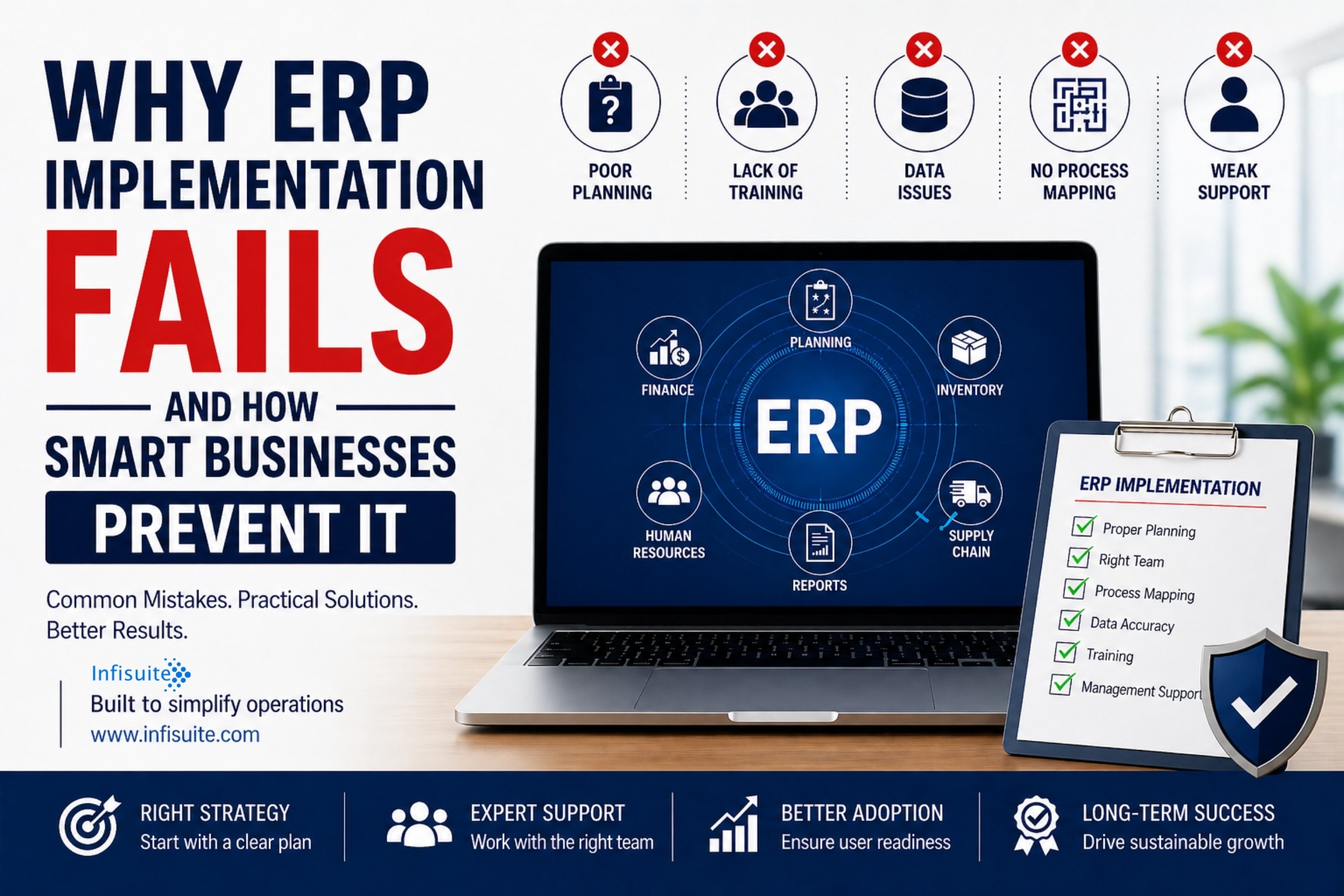
This article examines the ERP implementation failure rate in detail — what the data says, how failure risk varies by industry and company size, and the organizational patterns behind the numbers. If you’re looking for the practical prevention playbook, read our companion guide on why ERP implementation fails and how smart businesses prevent it.
The ERP Failure Rate: What the Numbers Say
Before examining the causes, it helps to understand the scale of the problem:
- Up to 75% of ERP projects are considered failures by the organizations that commissioned them, according to studies cited by Forbes Technology Council
- Most failures are partial, not total. The system goes live but delivers significantly less value than expected
- Cost overruns of 50–200% above original budget are common in failed implementations
- Timeline overruns of 6–18 months beyond original go-live dates are frequently reported
- Shadow systems persist. Many organizations continue using legacy systems or spreadsheets alongside their ERP for months or years after go-live — a clear sign of incomplete adoption
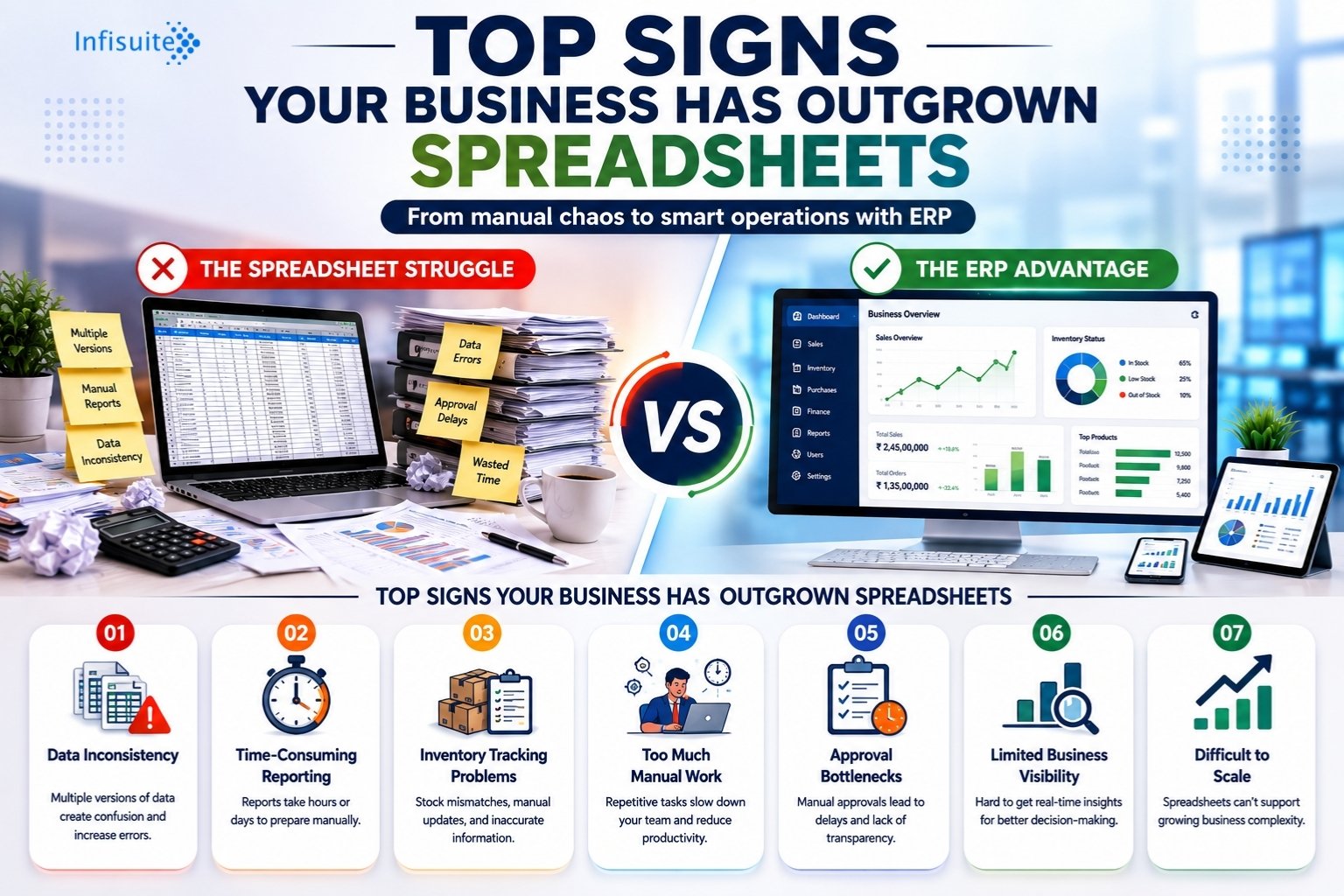
Understanding why this happens at an organizational level — not just a project level — is key to preventing it. If you are currently evaluating whether your business is ready for ERP, read our guide on the top signs your business has outgrown spreadsheets first.
How Organization Size Affects ERP Failure Risk
ERP failure does not affect all organizations equally. Company size plays a significant role in both the risk profile and the nature of implementation challenges.
Large Enterprises
Large organizations typically have the budget, IT resources, and project management capacity to support complex ERP implementations. However, they face a different set of risks: organizational complexity, multi-country operations, deeply entrenched legacy systems, and resistance from powerful internal stakeholders who have built influence around existing tools and processes. In large enterprises, ERP failures are often political as much as they are technical.
Mid-Market Businesses
Mid-market organizations sit in the most challenging position. They are large enough to have complex, multi-department operations that genuinely need ERP — but often lack the dedicated project management resources, change management expertise, and IT depth that large enterprises can deploy. They are also more likely to underestimate implementation complexity because they compare themselves to smaller businesses rather than larger ones.
SMEs
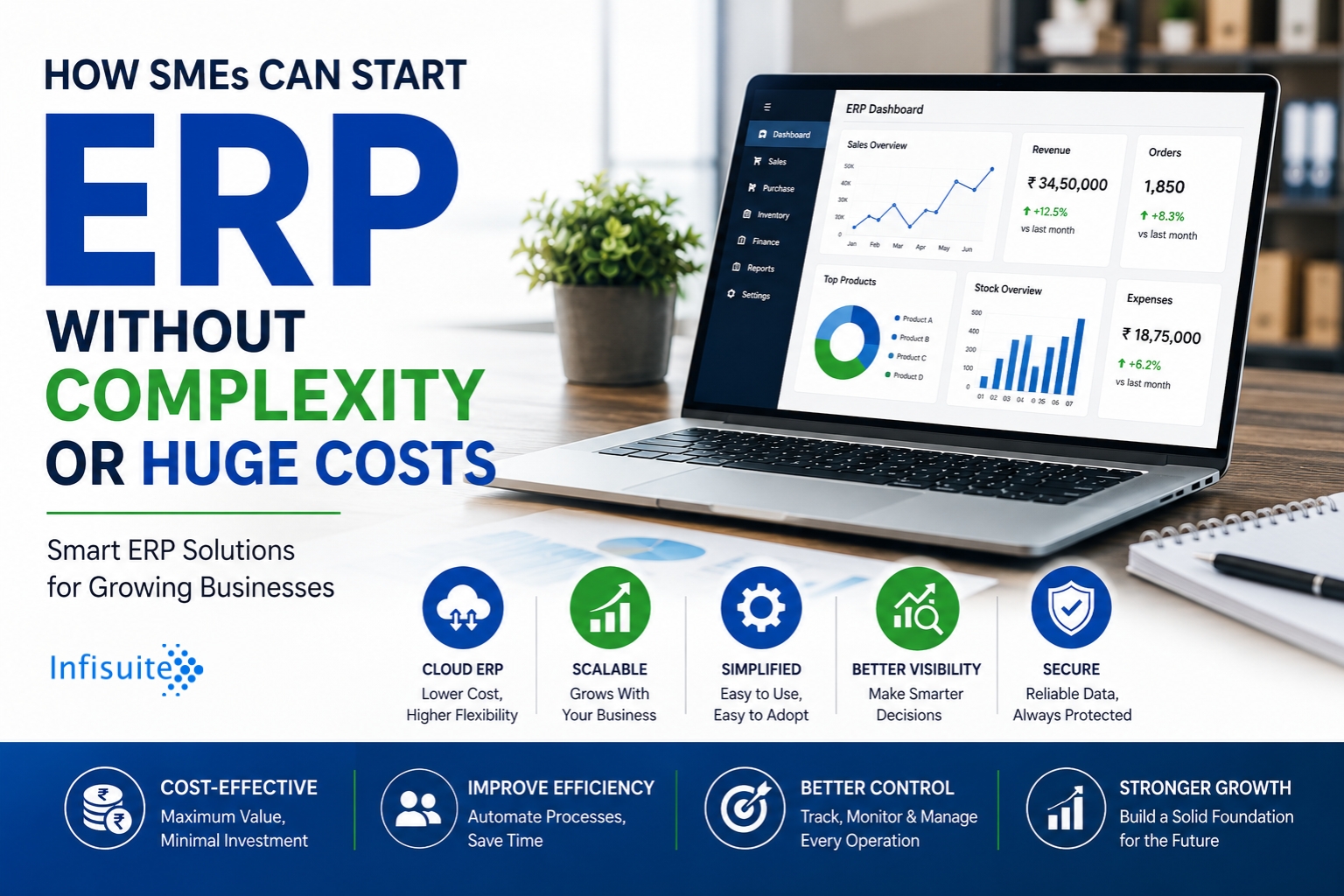
Small and medium-sized businesses face a unique challenge: they often delay ERP adoption until operational problems become severe, which means they implement under pressure rather than as part of a proactive growth strategy. Rushed implementations with insufficient planning are a leading cause of SME ERP failure. The good news is that modern Cloud ERP has made implementation far more accessible for SMEs — but only when approached correctly. Read our guide on how SMEs can start ERP without complexity to understand what a well-managed SME implementation looks like.
How Industry Type Affects ERP Failure Risk
The industry a business operates in significantly shapes the ERP implementation challenge. Some industries have straightforward operational models that map cleanly onto standard ERP modules. Others have highly complex, regulation-heavy, or seasonally variable operations that require deep customization — and customization is one of the leading drivers of ERP cost overruns and delays.
Manufacturing
Manufacturing organizations face some of the most complex ERP implementations due to multi-level bill of materials, production scheduling, quality control requirements, and supply chain complexity. Failure often stems from underestimating the integration work required to connect ERP with shop-floor systems and existing machinery.
Distribution and Logistics
Distribution businesses struggle with real-time inventory synchronization across multiple locations, last-mile delivery tracking, and complex pricing structures. ERP implementations in this sector frequently fail when inventory data quality is poor at the point of migration.
Professional Services
Service businesses — consulting firms, agencies, legal practices — often resist ERP because their operations feel less “product-like.” Implementations fail here when the system is configured for product-centric workflows that don’t reflect how service delivery actually works in the organization.
Retail and eCommerce
Retail ERP failures are frequently caused by integration complexity — connecting ERP to point-of-sale systems, online storefronts, marketplace channels, and logistics partners. When these integrations are underscoped at the start, go-live becomes a crisis.
The 6 Organizational Patterns Behind ERP Failure
Beyond industry and size, research consistently identifies six organizational patterns that predict ERP failure. These are not technical issues — they are structural and cultural ones.
1. Treating ERP as an IT Project
The single most destructive organizational pattern is treating ERP as an IT department initiative rather than a business transformation. When ERP is owned by IT rather than by business leadership, the system gets configured around technical preferences rather than operational reality. Department heads disengage, adoption suffers, and the business gets a technically functional system that nobody actually uses properly.
As McKinsey’s digital transformation research consistently shows, technology initiatives that are driven by business strategy rather than IT capability are significantly more likely to deliver measurable value.
2. Underinvesting in Change Management
Organizations routinely allocate 80–90% of their ERP budget to software and implementation — and less than 10% to change management, training, and user adoption. This imbalance is a leading predictor of failure. A system that employees don’t trust, understand, or use effectively is a failed system regardless of its technical quality.
3. Over-Customizing the System
Every customization adds cost, complexity, and implementation risk. Organizations that insist on replicating every nuance of their existing processes in the new ERP system — rather than adapting to the system’s best-practice workflows — consistently experience longer timelines, higher costs, and more post-go-live issues. The most successful implementations follow a “configure, don’t customize” principle wherever possible.
4. Selecting the Wrong Implementation Partner
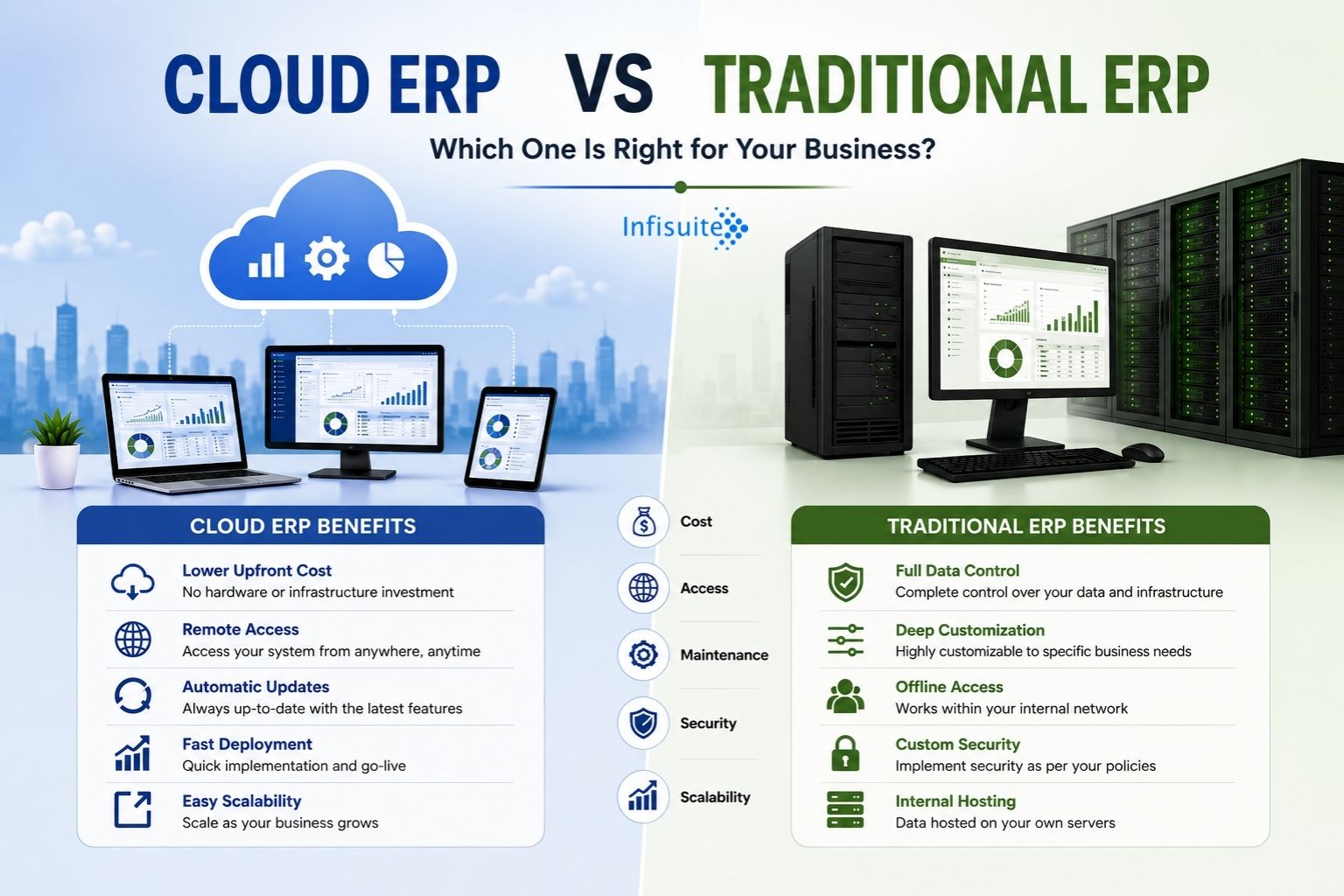
ERP vendors and implementation partners are not interchangeable. An implementation partner with strong technical knowledge but limited industry experience will configure a technically sound system that doesn’t reflect how your business actually operates. Always evaluate implementation partners on industry-specific experience, not just technical certifications. For a side-by-side comparison of deployment approaches, see our guide on Cloud ERP vs Traditional ERP.
5. Ignoring Data Quality Until It’s Too Late
Organizations consistently underestimate how long data cleaning and migration takes — and how much poor data quality affects post-go-live performance. Dirty data migrated into a new ERP system doesn’t become clean data. It becomes dirty data with a new interface. Inventory mismatches, duplicate supplier records, and incorrect opening balances discovered after go-live are among the most disruptive and expensive problems an organization can face.
6. Going Live Across the Entire Organization Simultaneously
Big-bang ERP go-lives — where the entire organization switches to the new system on a single date — carry exponentially higher risk than phased rollouts. When problems emerge (and they always do), a big-bang approach means every part of the business is affected simultaneously. Phased implementations allow teams to learn, adapt, and resolve issues in controlled stages before the next phase begins.
What Successful ERP Organizations Do Differently
The organizations that implement ERP successfully share a common set of behaviors that distinguish them from those that fail:
- They start with process, not software. Successful implementations begin with a thorough review and redesign of business processes — before any system configuration begins.
- They invest in people as much as technology. Training, change management, and executive sponsorship receive dedicated budget and attention throughout the project.
- They phase the rollout. Rather than going live across the entire organization at once, they implement department by department or module by module — learning and adjusting at each stage.
- They clean data before migration. Data quality is treated as a project deliverable, not an afterthought.
- They choose the right partner. Implementation partners are selected on the basis of industry experience, communication style, and post-go-live support quality — not just license price.
- They measure outcomes, not just go-live dates. Success is defined by operational improvements — reporting speed, inventory accuracy, workflow efficiency — not by whether the system went live on schedule.
For the full step-by-step prevention playbook, read our companion article: Why ERP Implementation Fails — And How Smart Businesses Prevent It.
ERP Failure Risk by Implementation Approach
| Implementation Approach | Risk Level | Why |
|---|---|---|
| Big-bang, full organization go-live | 🔴 High | No room to learn and adapt; all problems hit at once |
| Heavy customization of standard modules | 🔴 High | Increases cost, timeline, and post-go-live complexity |
| IT-led with minimal business involvement | 🔴 High | System configured for technical preferences, not operations |
| Phased rollout by department or module | 🟡 Medium | Controlled risk but requires strong coordination between phases |
| Business-led with strong executive sponsorship | 🟢 Low | Aligned to operational reality; strong adoption culture |
| Cloud ERP with experienced implementation partner | 🟢 Low | Faster deployment, vendor-managed maintenance, lower upfront risk |
Frequently Asked Questions
What percentage of ERP implementations fail?
Industry estimates vary, but research consistently suggests that between 55% and 75% of ERP projects experience significant overruns in cost, timeline, or expected outcomes. Total system failures are less common — partial failures, where the system goes live but underperforms, are far more prevalent.
Which industries have the highest ERP failure rates?
Manufacturing, distribution, and retail tend to face the highest implementation complexity due to integration requirements and data volume. However, failure can occur in any industry when organizational patterns — poor planning, weak change management, over-customization — are present.
Is Cloud ERP less likely to fail than on-premise ERP?
Cloud ERP generally carries lower implementation risk for SMEs and mid-market organizations because it requires less infrastructure setup, deploys faster, and is maintained by the vendor. However, organizational failure patterns — poor planning, weak adoption, data quality issues — affect Cloud ERP implementations just as much as on-premise ones.
How can an organization reduce ERP failure risk?
The most impactful steps are: invest in change management, phase the rollout, clean data before migration, involve business leaders (not just IT), and choose an implementation partner with relevant industry experience.
What should we do if our ERP implementation is struggling?
Stop, assess honestly, and reset expectations. Identify the root cause — is it adoption, data quality, process misalignment, or partner capability? Address the root cause before pushing forward. A struggling implementation that is rescued early costs far less than one that is abandoned or replaced.
Conclusion
ERP implementation failure is not inevitable — but it is common, and the reasons are well understood. The organizations that fail share predictable patterns: treating ERP as an IT project, underinvesting in people, over-customizing, ignoring data quality, and going live too fast across too much of the organization at once.
The organizations that succeed do the opposite. They treat ERP as a business transformation, invest in change management, phase their rollout, clean their data, and measure success by operational outcomes rather than go-live dates.
Understanding the failure patterns is the first step to avoiding them. The second step is choosing the right ERP platform and the right implementation partner for your business size, industry, and operational reality.
At Infisuite, we help organizations implement ERP the right way — with structured methodology, industry-specific expertise, and post-go-live support that ensures the system delivers lasting value. Learn more about our approach at infisuite.com.
Written by Anjana A
ERP & Business Software Specialist, Infisuite
Anjana A writes about ERP implementation, selection, and business automation for growing SMEs. Drawing on Infisuite’s experience guiding organizations through successful ERP rollouts, she focuses on data-driven, execution-first guidance that helps projects beat the odds.