

Quick Answer
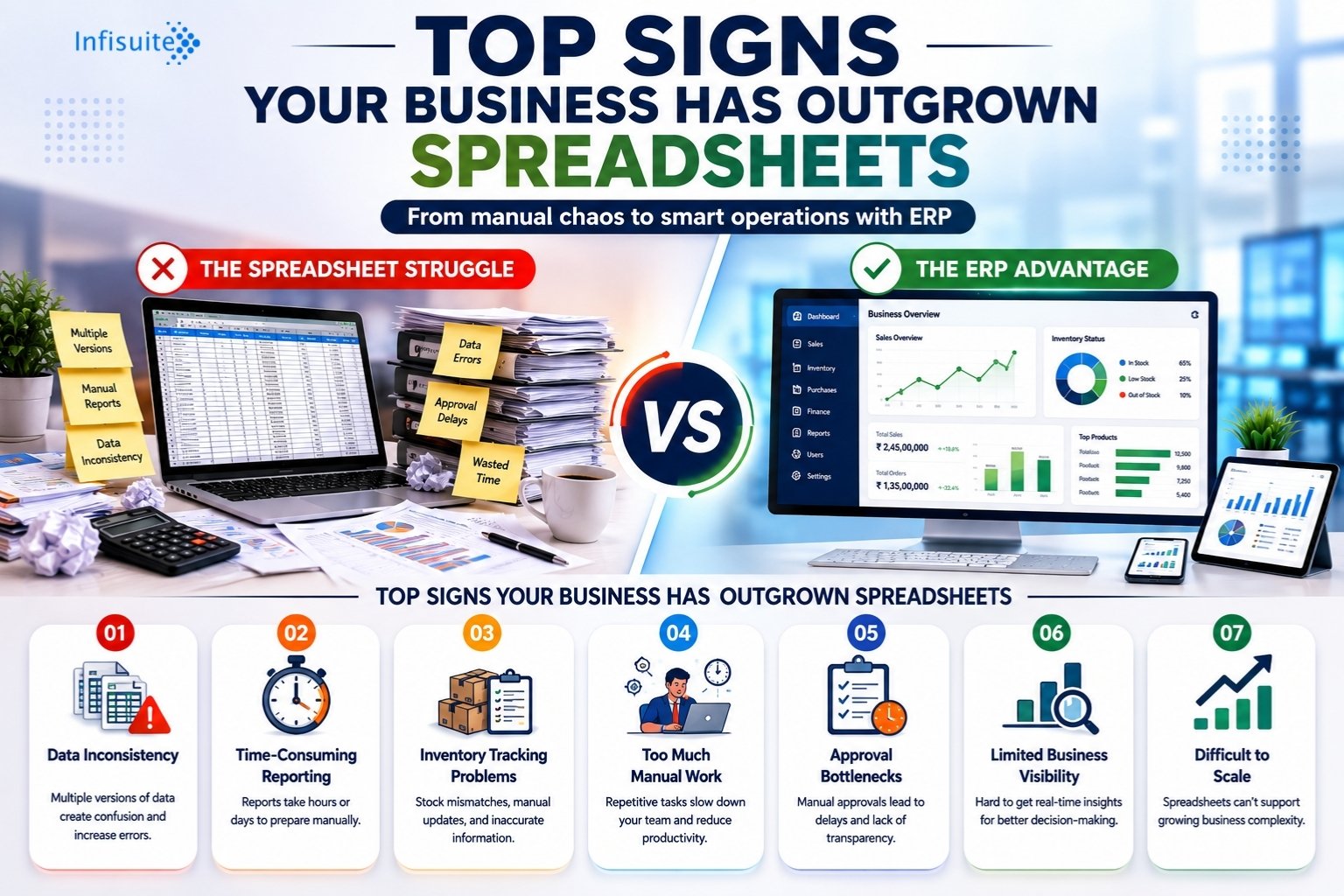
Your business has outgrown spreadsheets when the signs of strain appear: teams work from different versions of the same data, reports take hours or days, inventory is hard to track accurately, too much time goes to manual data entry, approvals get lost in email, leadership has no real-time view, and growth makes operations harder instead of easier. When several of these are true, spreadsheets have become the bottleneck — and it’s time to move to an integrated ERP system built to scale.
Key Takeaways
- Spreadsheets are a starting point, not a scaling strategy. They break down as complexity grows.
- The clearest sign is version chaos — different teams working from different numbers.
- Manual reporting and data entry quietly drain hours and introduce errors.
- Lost approvals and no real-time visibility signal you’ve outgrown manual systems.
- An integrated ERP fixes all of it — one source of truth, automated workflows, real-time dashboards.
Spreadsheets changed the way businesses manage data. For early-stage businesses, they are fast, flexible, and free. But there comes a point in every growing business when spreadsheets stop being a tool — and start becoming the problem.
According to Gartner, businesses that rely on manual, disconnected data systems face significantly higher operational risk as they scale. Yet many SMEs continue running on spreadsheets long after they’ve outgrown them — losing time, accuracy, and competitive advantage in the process.
If any of the signs below sound familiar, it may be time to move beyond spreadsheets and into a smarter system.
1. Your teams are working with different versions of the same data
When every department maintains its own spreadsheet, data consistency becomes impossible to guarantee. Sales has one version of the numbers. Finance has another. Operations has a third. By the time someone compiles a report, the data is already out of date — and nobody is quite sure which version is correct.
This leads to:
- Duplicate records and conflicting figures
- Decisions made on inaccurate information
- Time wasted reconciling data across teams
- Mistrust between departments
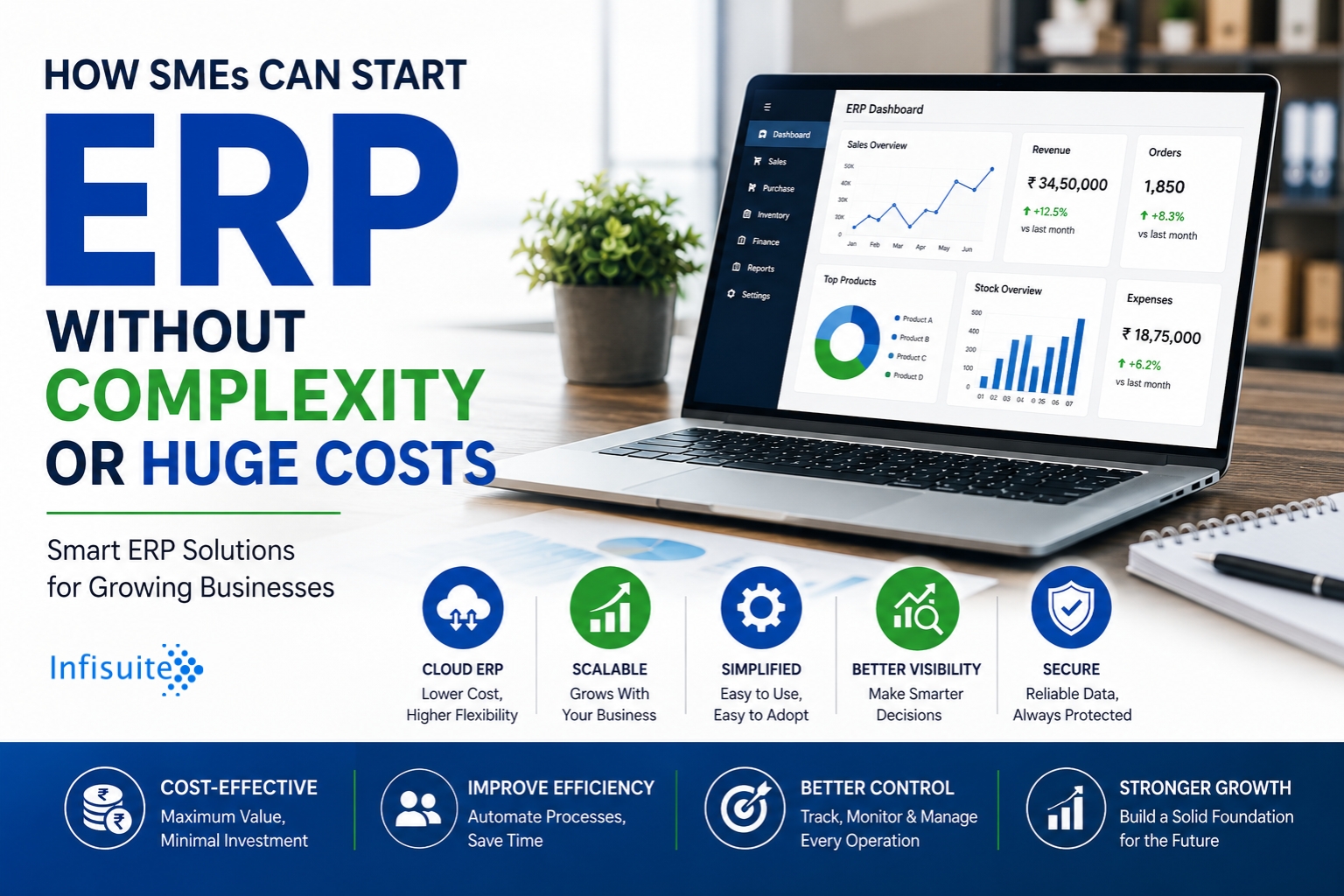
A centralized ERP system eliminates version confusion by giving every team access to a single, real-time source of truth. Read how SMEs can move to ERP without complexity to understand what this transition looks like in practice.
2. Reporting takes hours — or days
If your team spends significant time every week pulling data from multiple spreadsheets, formatting reports, and chasing colleagues for updated figures, your business is paying a heavy productivity tax.
Manual reporting creates:
- Delayed business insights
- Human errors in calculations and formatting
- Reports that are outdated the moment they’re published
- Management decisions based on incomplete data
ERP systems automate reporting and deliver real-time dashboards — so leadership always has accurate, up-to-date visibility without anyone spending hours compiling it. As SAP explains, modern ERP platforms are specifically designed to replace these manual reporting cycles with automated, integrated data flows.
3. Inventory and operations are impossible to track accurately
Spreadsheets can track basic inventory — but only up to a point. As order volumes grow, product lines expand, and supply chains become more complex, spreadsheet-based inventory tracking breaks down fast.
Businesses relying on spreadsheets for inventory typically struggle with:
- Stock discrepancies between what the spreadsheet says and what’s actually on the shelf
- Overselling or underselling due to inaccurate stock levels
- Delayed order fulfillment caused by poor stock visibility
- No real-time view of purchase orders, supplier deliveries, or returns
ERP systems track inventory in real time — across warehouses, locations, and channels — giving operations teams the visibility they need to fulfill orders accurately and on time. Learn more in our guide to AI inventory management software.
4. Too much time is spent on manual data entry
Manual data entry is one of the most expensive hidden costs in a growing business. When employees spend hours copying data from one spreadsheet to another, re-entering the same information across systems, or manually updating records, they are not doing the work that actually grows the business.
Beyond productivity loss, manual entry is also a significant source of errors. Research by spreadsheet expert Professor Raymond Panko found that around 88% of spreadsheets contain errors — undermining the reliability of even the most carefully managed spreadsheet systems.
This results in:
- Operational inefficiencies that compound over time
- Employee frustration and low morale
- Avoidable process delays
- A business that can’t scale without hiring more people to manage spreadsheets
5. Approvals and workflows happen over email — with no visibility
Managing approvals through email chains and spreadsheet trackers is one of the clearest signs a business has outgrown its systems. When a purchase order, leave request, or client proposal requires approval, it gets buried in someone’s inbox — and nobody knows where it stands.
Without proper workflow systems, businesses experience:
- Approvals stuck in inboxes for days
- No audit trail of who approved what and when
- Missed follow-ups and deadline breaches
- Accountability gaps when things go wrong
ERP systems automate approval workflows with built-in notifications, escalation rules, and full audit trails — so nothing gets lost and everyone stays accountable. This is one of the key reasons businesses that delay ERP adoption often face bigger operational problems down the line.
6. Leadership has no real-time view of the business
Business leaders need fast, reliable access to operational data. When that data lives across dozens of spreadsheets maintained by different people, getting a clear picture of the business requires significant manual effort — and by the time the picture is assembled, it’s already out of date.
Without centralized visibility, leaders struggle to track:
- Sales performance across channels and regions
- Inventory levels and stock movement
- Financial performance and cash flow
- Department productivity and operational efficiency
- Customer order status and fulfillment rates
ERP systems provide centralized dashboards and real-time reporting that give leadership an accurate view of the entire business — at any moment, from any device. This is the foundation of building a single source of truth.
7. Your business is growing but your systems can’t keep up
Perhaps the most telling sign of all: your business is growing, but operations are getting harder, not easier. You’re hiring more people to manage the same spreadsheet-based processes. Coordination is becoming more complex. Mistakes are increasing. And everyone is spending more time managing the system than doing actual work.
Spreadsheets are not built for scale. As Microsoft itself acknowledges, Excel is a powerful tool for individual analysis — but it was never designed to be the operational backbone of a growing business.
As businesses scale, spreadsheet limitations compound:
- Data complexity grows beyond what spreadsheets can reliably manage
- Team coordination breaks down without a shared system
- Manual processes become bottlenecks that block growth
- Operational risks increase as data accuracy declines
ERP systems are built specifically to scale with your business — handling increasing data volumes, users, and complexity without adding operational burden.
What ERP does that spreadsheets can’t
Moving to an ERP system isn’t just about fixing spreadsheet problems — it’s about building the operational foundation your business needs to grow confidently.
A modern ERP system gives your business:
- A single, centralized source of real-time business data
- Automated workflows that replace manual processes
- Accurate inventory and operations tracking
- Instant reporting and business intelligence dashboards
- Scalable infrastructure that grows with your business
- Improved team collaboration and accountability
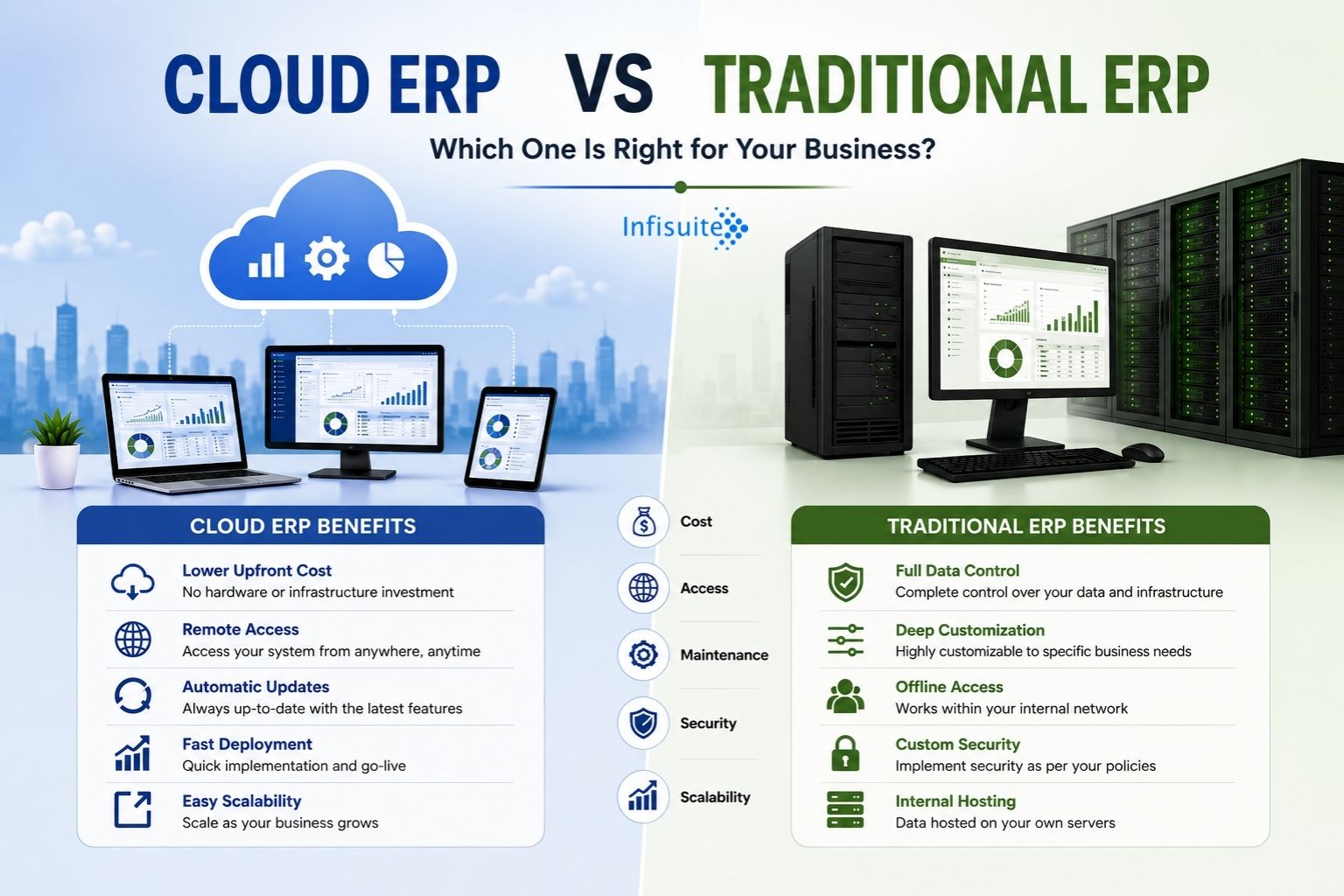
Not sure where to start? Read our comparison of Cloud ERP vs Traditional ERP to understand which deployment model fits your business best.
Frequently Asked Questions
How do I know if my business is ready for ERP?
If you’re experiencing any of the signs above — data inconsistency, slow reporting, inventory errors, manual bottlenecks, or limited visibility — your business is likely ready. ERP systems are no longer just for large enterprises; modern cloud ERP solutions are accessible and practical for SMEs.
Is ERP implementation complicated?
It doesn’t have to be. With the right implementation partner and a phased approach, ERP can be deployed without disrupting your operations. Read our guide on how SMEs can start ERP without complexity for practical advice.
Can ERP replace all our spreadsheets?
For most operational processes — inventory, reporting, approvals, financials, and team coordination — yes. Some teams may continue using spreadsheets for specific analytical tasks, but the core operational data should live in your ERP system.
What’s the biggest risk of staying on spreadsheets too long?
The biggest risk is making critical business decisions on inaccurate or incomplete data. As businesses grow, spreadsheet errors compound — and the cost of those errors grows with them.
Conclusion
Spreadsheets are a starting point — not a long-term strategy. If your business is experiencing data inconsistency, reporting delays, inventory confusion, manual bottlenecks, or limited visibility, the spreadsheet era is over.
The good news: moving to ERP is more accessible than most businesses think. The right ERP system doesn’t just solve today’s problems — it builds the operational foundation your business needs to scale efficiently for years to come.
At Infisuite, we help growing businesses make this transition smoothly — from understanding your operational needs to implementing a scalable ERP solution that fits your business. Talk to our team to learn more.
Written by Anjana A
ERP & Business Software Specialist, Infisuite
Anjana A writes about ERP, business software, and automation for growing SMEs. Drawing on Infisuite’s experience helping businesses move beyond spreadsheets, she focuses on practical guidance for scaling operations without adding complexity.