


Quick Answer
More data doesn’t mean more clarity. Most businesses have plenty of data — but it’s scattered across disconnected tools, spreadsheets, and departments. That fragmentation is the real problem. When the same number means different things in different systems, no one trusts the reports, and decisions slow down. Clarity doesn’t come from collecting more data. It comes from unifying it. A single, connected platform — like an integrated ERP — turns scattered data into one reliable source of truth.
Key Takeaways
- More data ≠ more clarity. The problem is rarely a lack of data — it’s fragmentation.
- Scattered data breaks trust. When systems disagree, no one believes the numbers.
- Clarity comes from connection. Unified data, not more dashboards, drives better decisions.
- Data silos slow everything down. Teams waste time reconciling instead of acting.
- A single source of truth is the fix. An integrated platform unifies data across every department.
Businesses today collect more data than ever before. Every tool, app, and platform generates numbers, reports, and dashboards. And yet, when it’s time to make a decision, many leaders feel less certain than they should.
This is the paradox of modern business: more data, less clarity. If your organisation is drowning in information but still struggling to answer simple questions, you’re not alone — and the problem isn’t the amount of data. It’s how it’s organised.
This article explains why “data everywhere” fails to deliver clarity, and what actually fixes it.
The Myth: More Data Means Better Decisions
It’s an appealing idea. Collect enough data, and the right decisions become obvious. So businesses invest in tool after tool, each generating its own reports and metrics.
But it doesn’t work that way. Studies of enterprise data suggest that a large share of collected business data is never actually used for decisions — often cited as up to 55% of an organisation’s data going “dark.” Piling up more data you don’t use doesn’t create clarity. It creates noise.
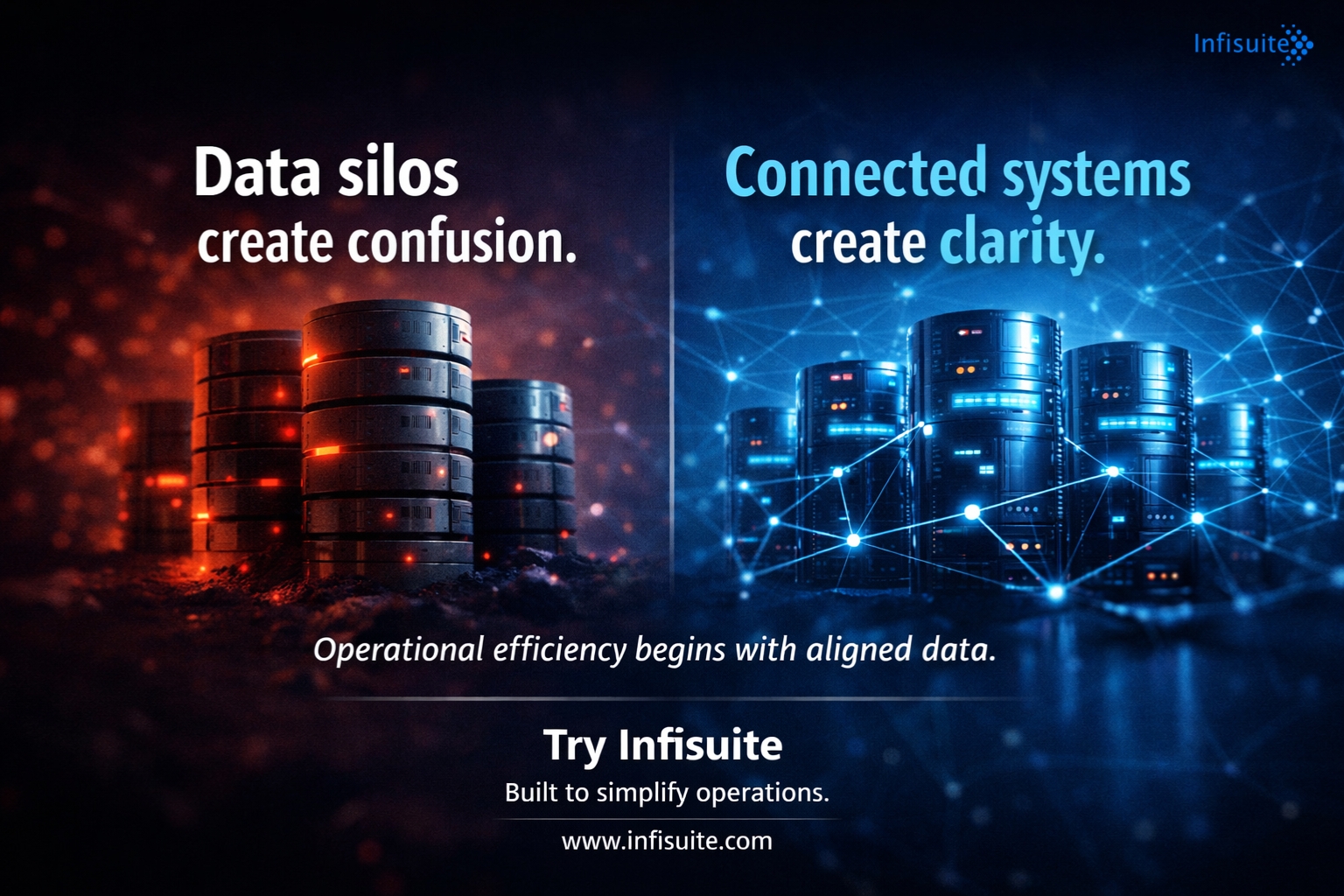
The truth is simple: clarity isn’t a function of how much data you have. It’s a function of how connected and trustworthy that data is.
Why “Data Everywhere” Actually Creates Confusion
When your data lives in many separate places, several problems emerge at once.
1. The Same Number Means Different Things
Your sales tool reports one revenue figure. Your accounting tool reports another. Your spreadsheet shows a third. Each was calculated differently. Now nobody knows which is right — so nobody fully trusts any of them.
2. No One Sees the Whole Picture
Each department has its own view, built from its own tools. But no one can see how it all fits together. The result is decisions made on partial information, over and over.
3. Reports Take Days, Not Minutes
When data is scattered, compiling a simple report means pulling numbers from multiple systems and stitching them together by hand. By the time the report is ready, the moment for the decision may have passed.
4. Errors Multiply
Every manual transfer between systems is a chance for error. Research by spreadsheet expert Professor Raymond Panko found that around 88% of spreadsheets contain errors. When decisions ride on those numbers, the risk compounds.
These are the classic symptoms of data silos — a problem we explore in depth in our article on how data silos destroy operational efficiency.
Data Everywhere vs Data Unified
| Dimension | Data Everywhere (Scattered) | Data Unified (Connected) |
|---|---|---|
| Trust in numbers | Systems disagree — no one trusts the data | One source of truth everyone believes |
| Reporting speed | Days of manual stitching | Real-time, on demand |
| Decision quality | Based on partial information | Based on the full picture |
| Error risk | High — every transfer risks mistakes | Low — data flows automatically |
The Real Fix: A Single Source of Truth
The solution to “data everywhere” isn’t less data. It’s connected data.
When all your business data lives in one integrated system, the confusion disappears. There’s one revenue figure, not three. One real-time view, not many partial ones. One place everyone trusts.
This is what a single source of truth means — and why it’s so powerful. We cover the concept in full in our guide on what a single source of truth is and why businesses need it.
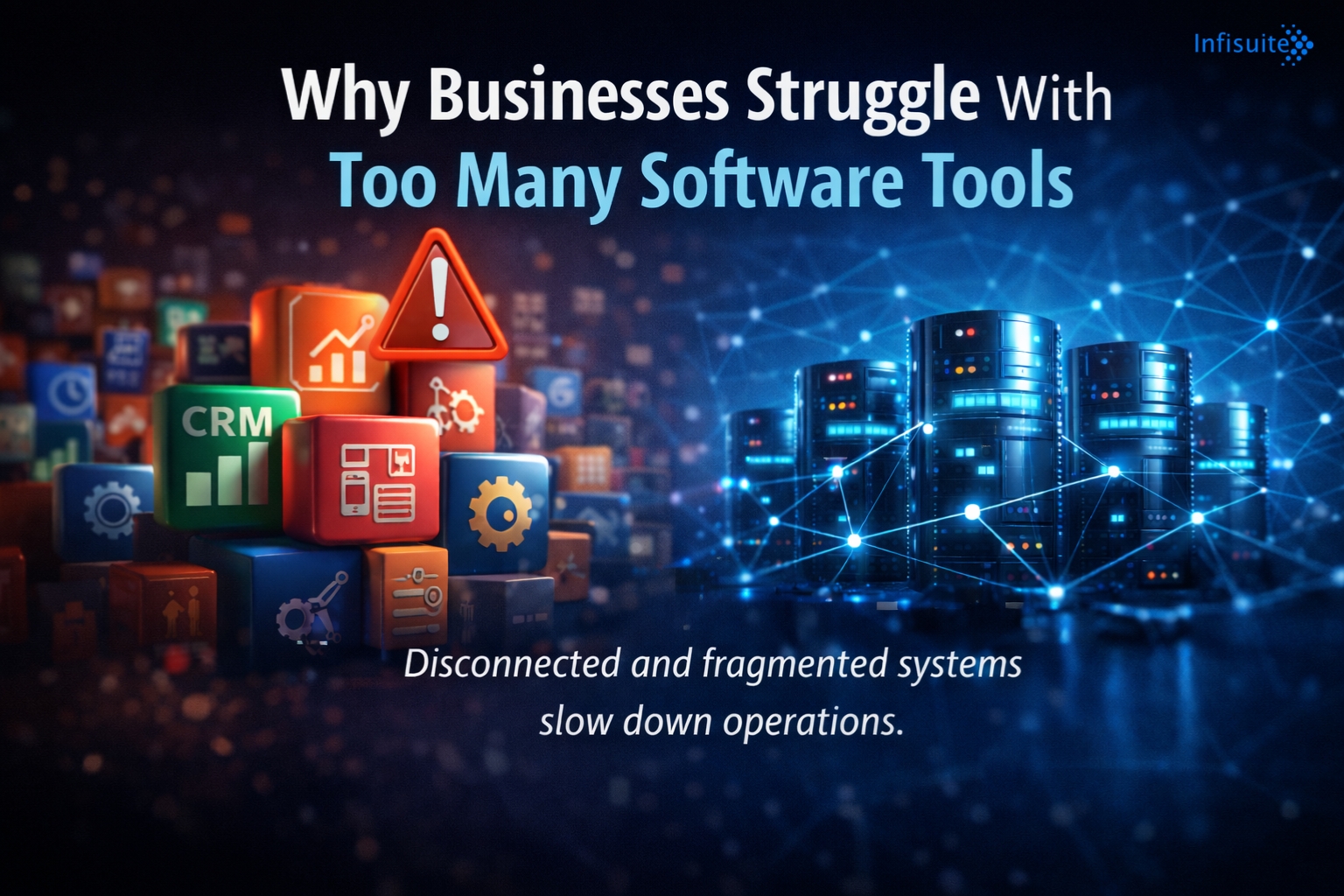
The path there is consolidation. Instead of many disconnected tools, growing businesses move to an integrated platform where sales, finance, inventory, and operations all share the same data. That’s exactly the problem we describe in our article on why businesses struggle with too many software tools.
How Integrated ERP Delivers Clarity
An integrated ERP platform solves the “data everywhere” problem at its root. Here’s how:
- One shared database. Every department works from the same data, so numbers always agree.
- Real-time updates. A sale, a purchase, or a payment updates everywhere instantly — no manual transfers.
- Automatic reporting. Reports pull from one source, so they’re accurate and available on demand.
- Full visibility. Leadership sees the whole business in one place, not fragmented department views.
The result is the clarity that “more data” alone could never deliver — because the problem was never the amount of data. It was the fragmentation. Infisuite brings every department onto one platform, so your data finally works together.
Frequently Asked Questions
Why does more data not lead to better decisions?
Because clarity depends on how connected and trustworthy your data is, not how much of it you have. When data is scattered across disconnected systems, it creates noise and conflicting numbers rather than insight.
What causes “data everywhere” confusion?
Data silos. When information lives in many separate tools, the same metric is calculated differently in each, reports take days to compile, and no one trusts the numbers. This fragmentation is the root cause of unclear decision-making.
How do you fix scattered business data?
By unifying it. Moving from many disconnected tools to a single integrated platform gives every department one shared, real-time source of truth — so numbers always agree and reports are instant.
What is a single source of truth?
A single source of truth is one central, authoritative place where all business data lives. Every team draws from the same data, which eliminates conflicting numbers and builds trust in reporting.
How does ERP improve data clarity?
An integrated ERP unifies sales, finance, inventory, and operations in one shared database. Data updates in real time across every department, reports pull from one source, and leadership sees the whole business at once.
Conclusion
The problem was never that you don’t have enough data. Most businesses have more than they know what to do with. The problem is that the data is scattered — trapped in disconnected tools that don’t agree with each other.
More dashboards won’t fix that. More clarity comes from connection, not collection.
When your data lives in one integrated platform, the confusion clears. One source of truth. One real-time picture. One version of the numbers everyone trusts. That’s when data finally delivers the clarity it was always supposed to.
Written by Anjana A
ERP & Business Software Specialist, Infisuite
Anjana A writes about ERP, data, and business automation for growing SMEs. Drawing on Infisuite’s experience helping businesses unify fragmented systems, she focuses on practical guidance for turning scattered data into clear, confident decisions.
Ready to turn scattered data into one clear source of truth? Talk to the Infisuite team to see how an integrated platform brings clarity to your business.